NGC 6140
NGC 6140
28’ x 18’ | 0.3”/px | 5600 × 3733 px
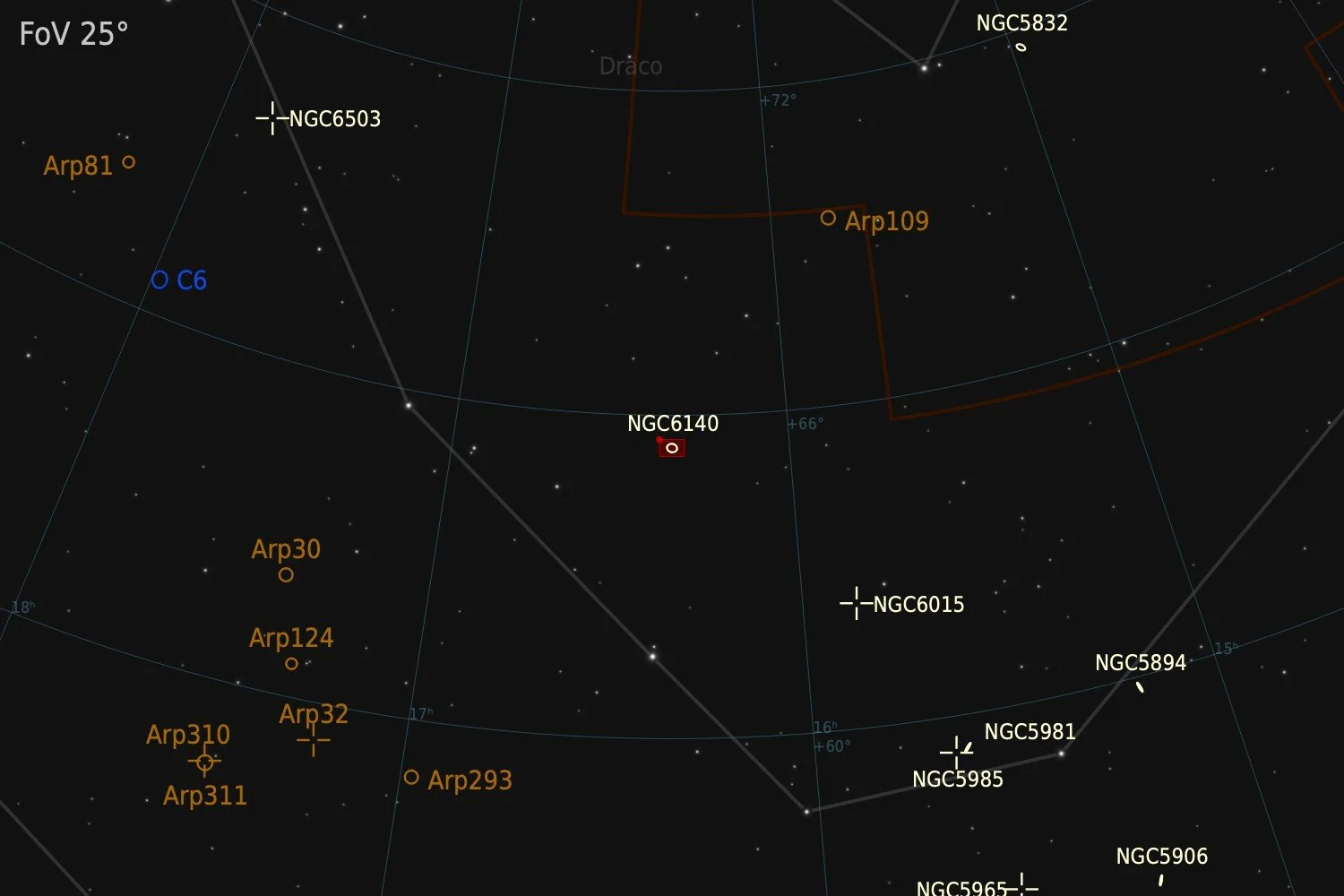
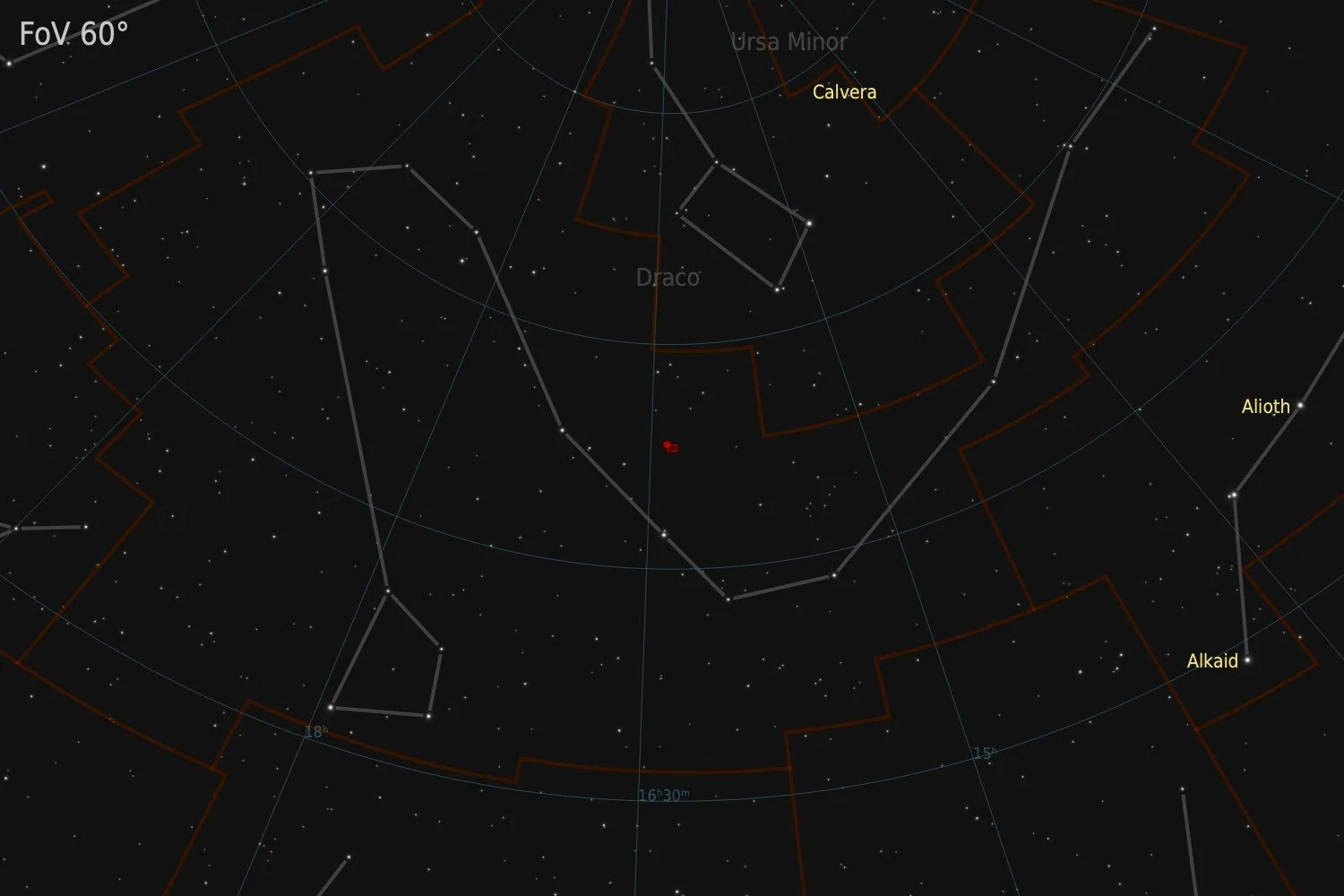
Draco
RA 16h 20m 58s Dec +65° 23’ 29” | 0°
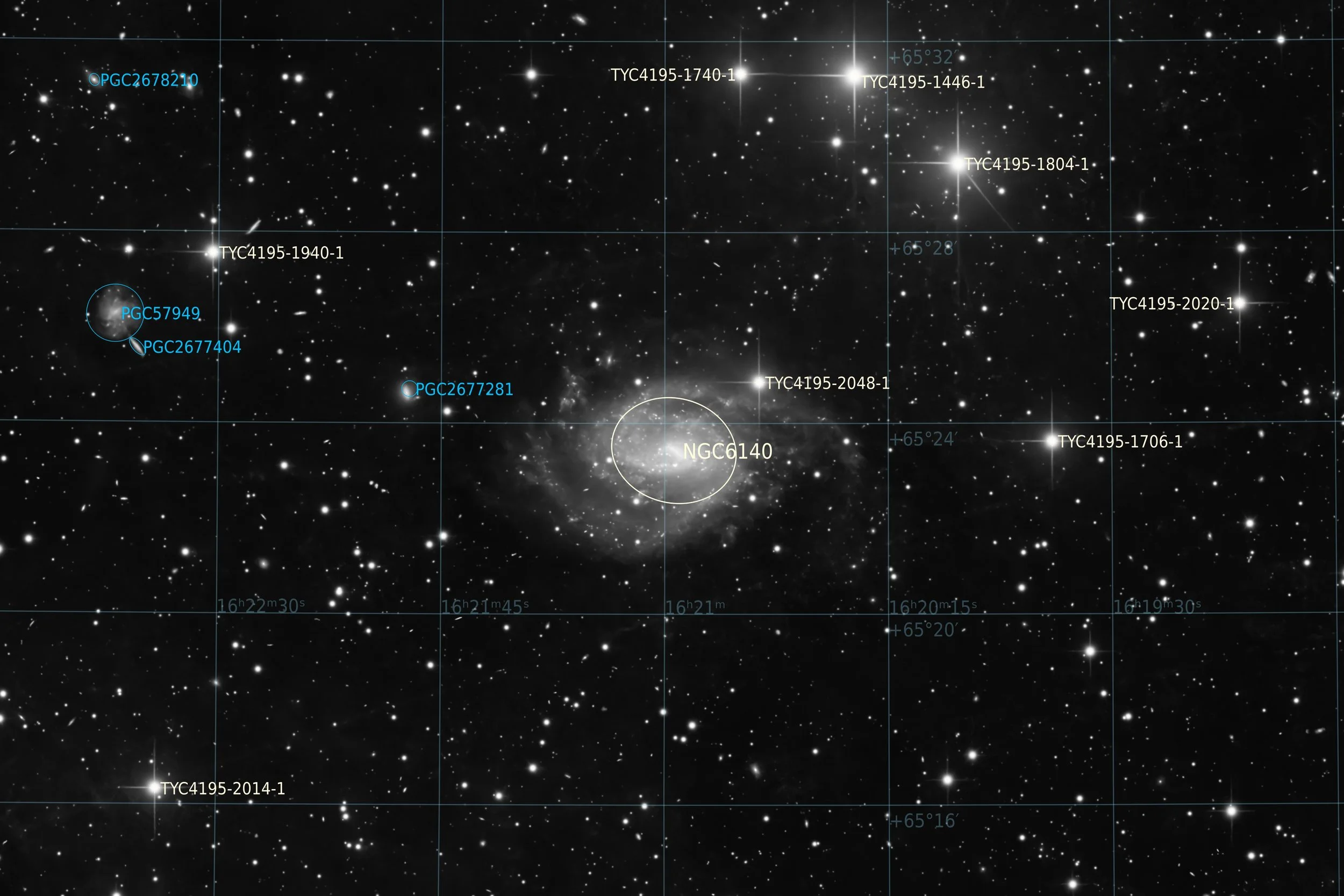
NGC 6140 is a barred spiral galaxy located in the constellation Draco. Estimates on the distance of NGC 6140 vary. Redshift-based estimates place it at approximately 42 million light-years, while an independent Tully-Fisher distance estimate suggests a closer figure of around 26 million light-years. The galaxy spans an apparent diameter of around 6 arcminutes on the sky and reaches an apparent magnitude of approximately 11.2, making it moderately bright. It is classified as SB(s)cd pec — a loosely wound, barred spiral with a peculiar designation reflecting structural irregularities that set it apart from a standard spiral morphology. The most visually distinctive feature of NGC 6140 is its central bar, which shows distortion at its northern end, with one of the associated spiral arms appearing somewhat detached or disconnected from the bar rather than flowing smoothly out of it. The galaxy's central region contains a chain of bright condensations that are visible in deeper images and contribute to its unusual classification.
Source: Claude.ai
Data Acquisition
Data was collected during 10 nights in August and September of 2026, using a 14” reflector telescope with full-frame camera at the remote observatory in Spain. Data was gathered using standard LRGB filters. A total of approximately 15 hours of data was finally combined to create the final image.
Location Remote hosting facility Roboscopes in Fregenal de la Sierra, Spain (38°N 6°W)
Sessions
Frames
Equipment
Telescope
Mount
Camera
Filters
Guiding
Accessoires
Software
Planewave CDK14 (2563mm @ f/7.2), Optec Gemini Rotating focuser
10Micron GM2000HPS, custom pier
Moravian C3-61000 Pro (full frame), cooled to -10 ºC
Chroma 2” LRGB unmounted, Moravian filterwheel L, 7-position
Unguided
Compulab Tensor I-22, Dragonfly, Pegasus Ultimate Powerbox v2
Voyager Advanced, Viking, Mountwizzard4, Astroplanner, PixInsight 1.9.5
Processing
All processing was done in Pixsinsight unless stated otherwise. Default features were enhanced using scripts and tools from RC-Astro, SetiAstro, GraXpert, CosmicPhotons and others. Images were calibrated using 50 Darks, 50 Flats, and 50 Flat-Darks, registered and integrated using WeightedBatchPreProcessing (WBPP). The processing workflow diagram below outlines the steps taken to create the final image.
Unfortunately I have been battling some dynamic dust motes on my sensor and filters over the summer, which were not always corrected well with the available flats. So some datasets are not corrected for dust motes for the full 100%. This dataset was one of them. That’s why in the starless phase of both the Lum and RGB image, the clone stamp tool was used to remove these dust motes.
The rest of the processing followed a fairly standard workflow, as outlined below.
Processing workflow (click to enlarge)
This image has been published on Astrobin.