

Images
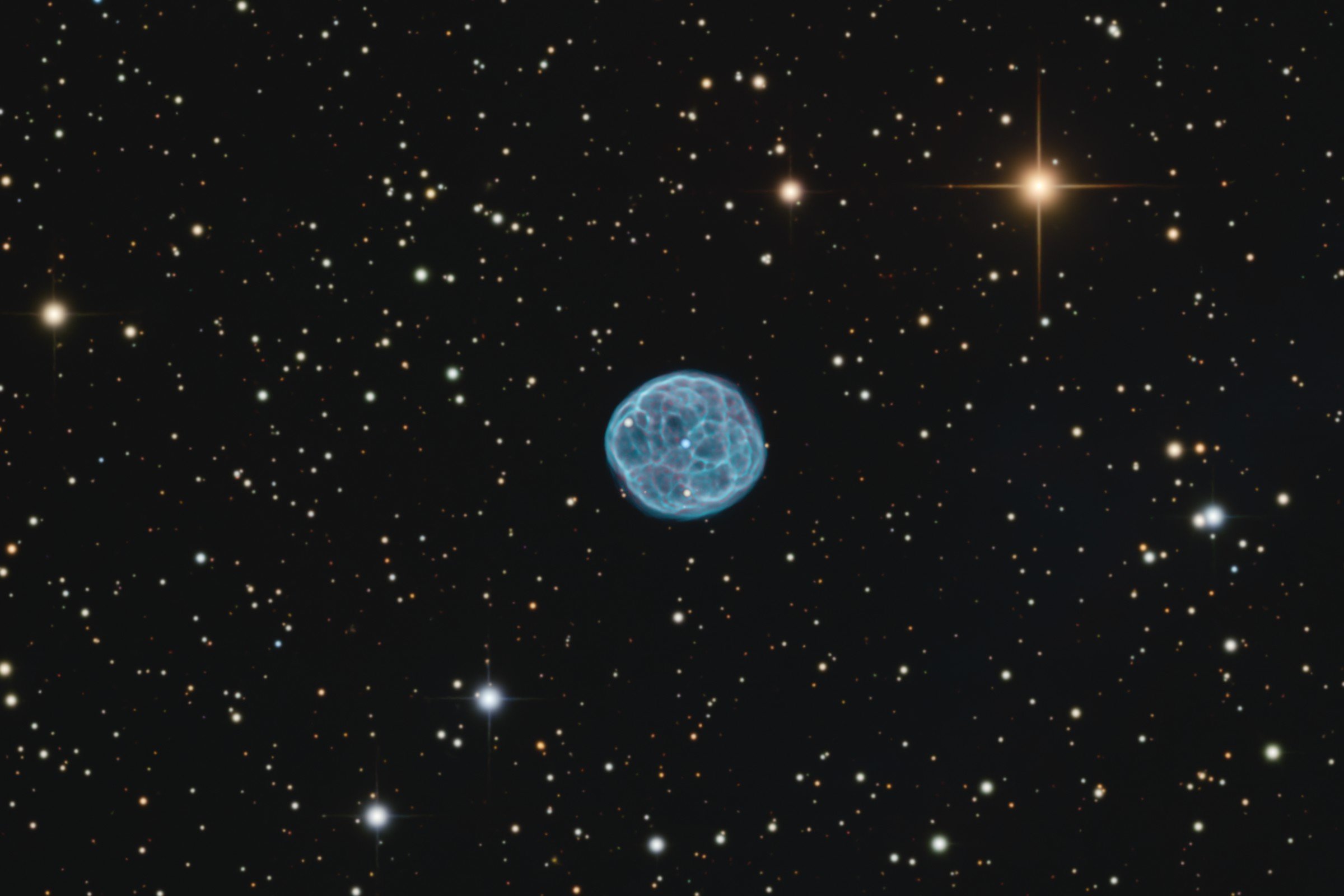
Abell 43
Abell 43 is a planetary nebula located in the constellation Ophiuchus. It was discovered by George Ogden Abell in 1955. The nebula has an apparent diameter of approximately 80 arcseconds on the sky. Due to the filamentary surface structures, it has been informally referred to as one of the galactic soccer balls. These structures are thought to arise from instabilities in the dense, expanding nebular shell. The central star of Abell 43, is an extremely hot evolved star. It is a hybrid PG 1159 star. These are intermediate objects transitioning from planetary nebula central stars to white dwarfs. The star has been confirmed as a pulsating variable, with periods of roughly 2,400 to 6,000 seconds
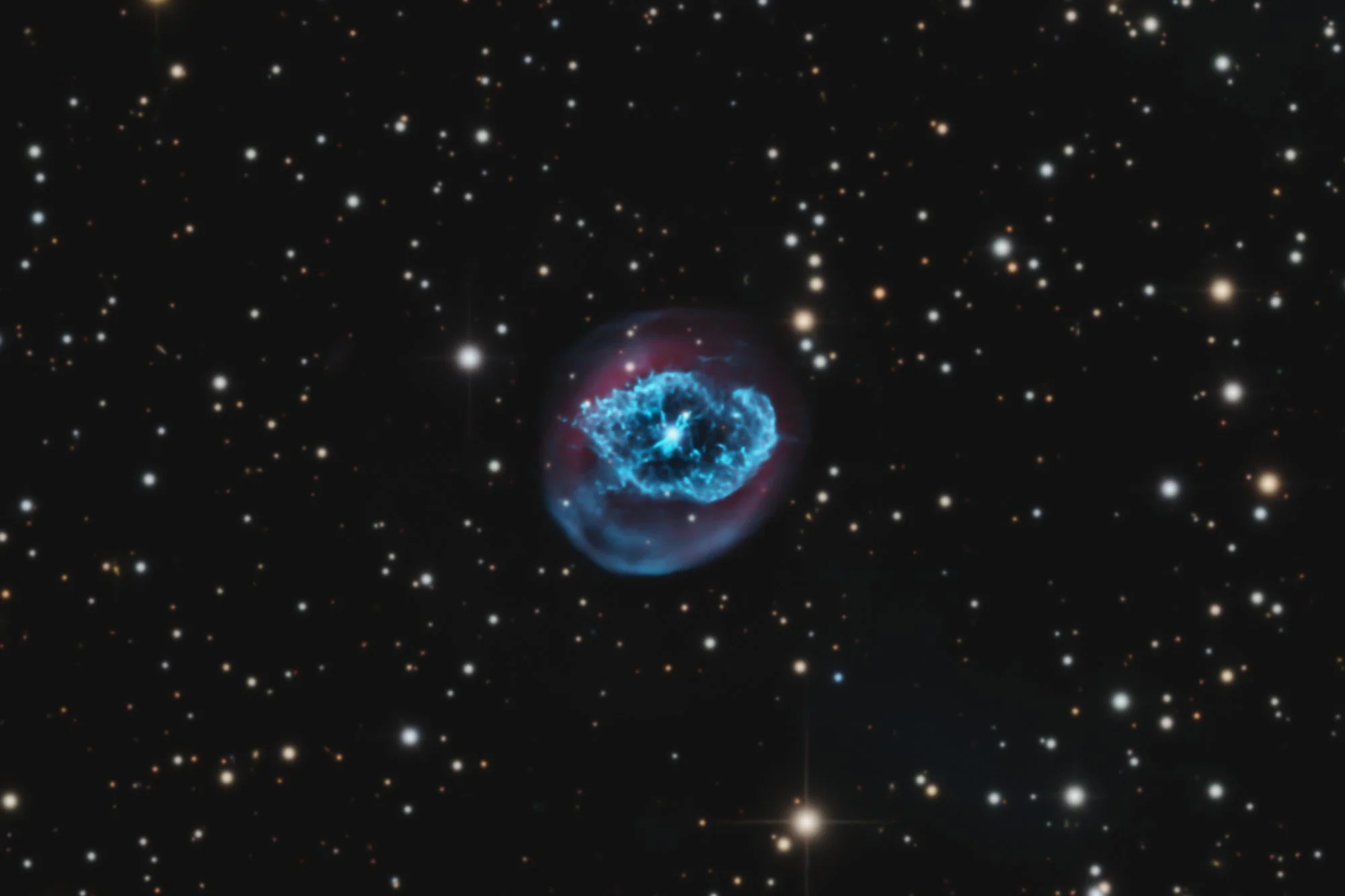
Abell 78
Abell 78 is a planetary nebula located in the constellation Cygnus. It was discovered by George Ogden Abell in 1955. Abell 78 lies at a distance of approximately 5,000 light-years from Earth and spans roughly 2.8 light-years in diameter, giving it an apparent size of around 1.8 arcminutes on the sky. Its outer shell consists of an ellipsoidal hydrogen-rich envelope expanding at approximately 40 kilometres per second, while a much more energetic inner region of hydrogen-poor material expands at velocities of up to 200 kilometres per second.
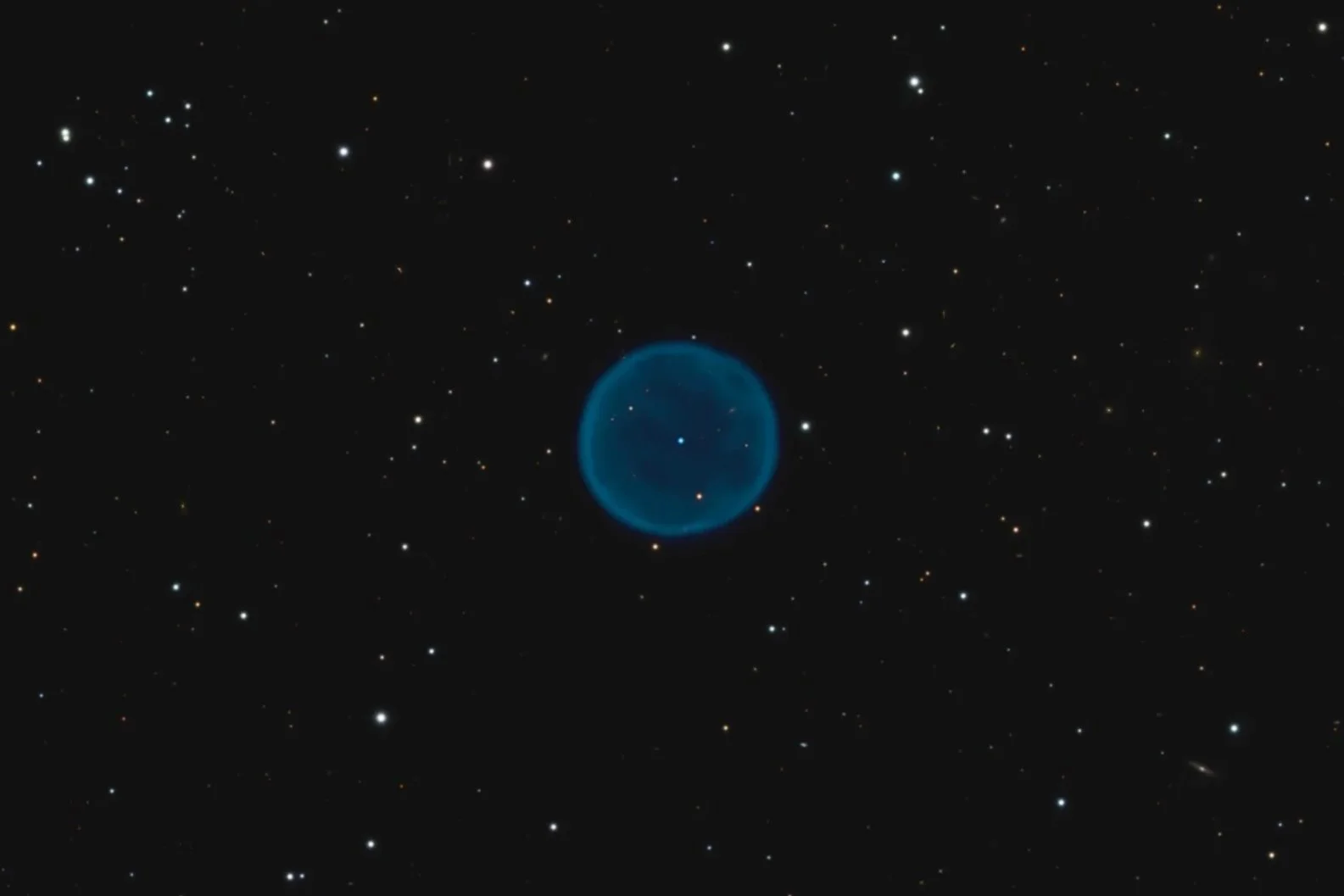
Abell 39
Abell 39, also known as PN A66 39, is a planetary nebula located in the constellation Hercules. Abell 39 lies at a distance of approximately 6,800 light-years from Earth. It spans a true diameter of roughly 5 light-years and has an apparent diameter of around 2.7 arcminutes on the sky. At its centre sits a hot white dwarf, the remnant of the star that shed its outer layers to create the nebula, estimated to have occurred around 22,000 years ago.