M80
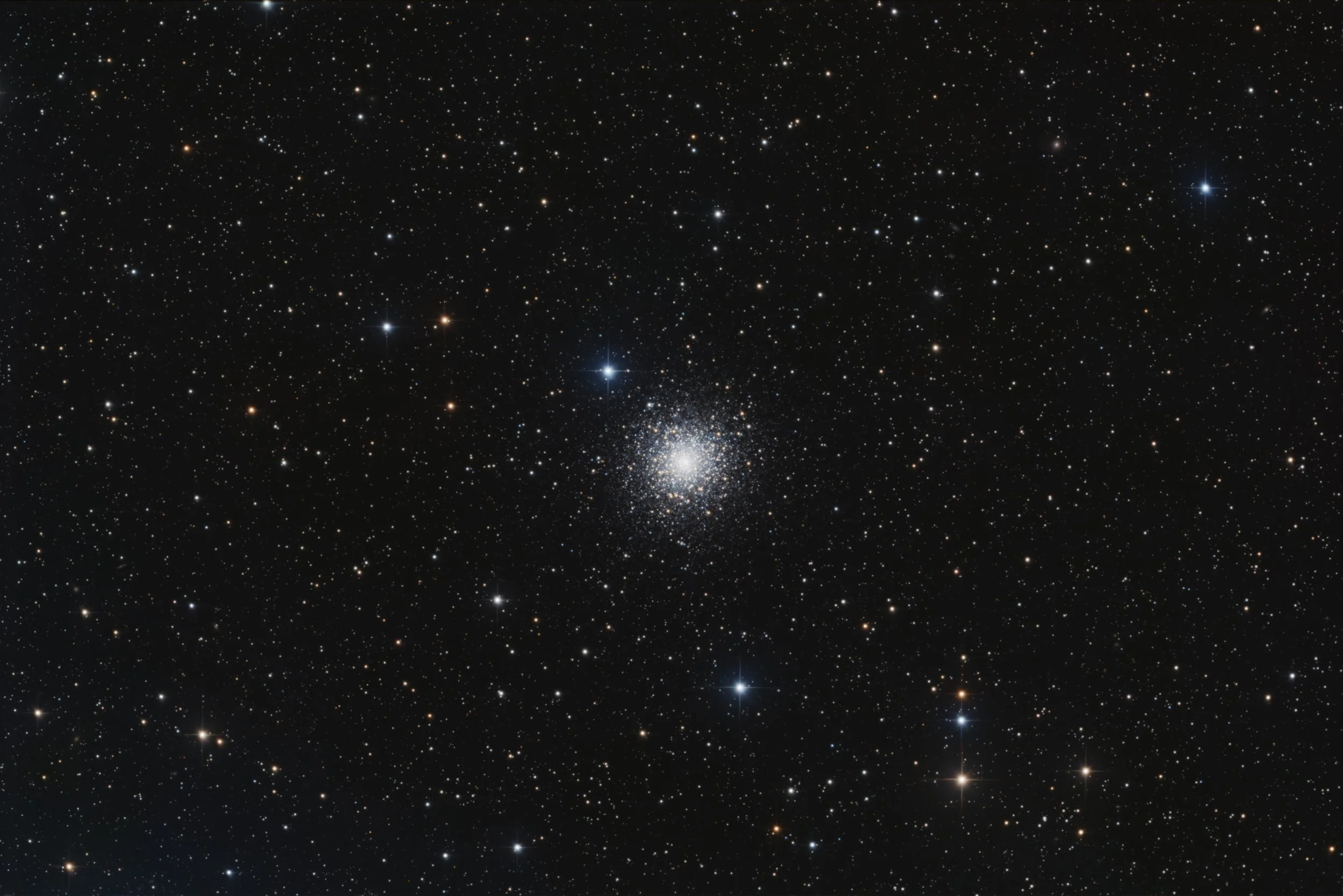
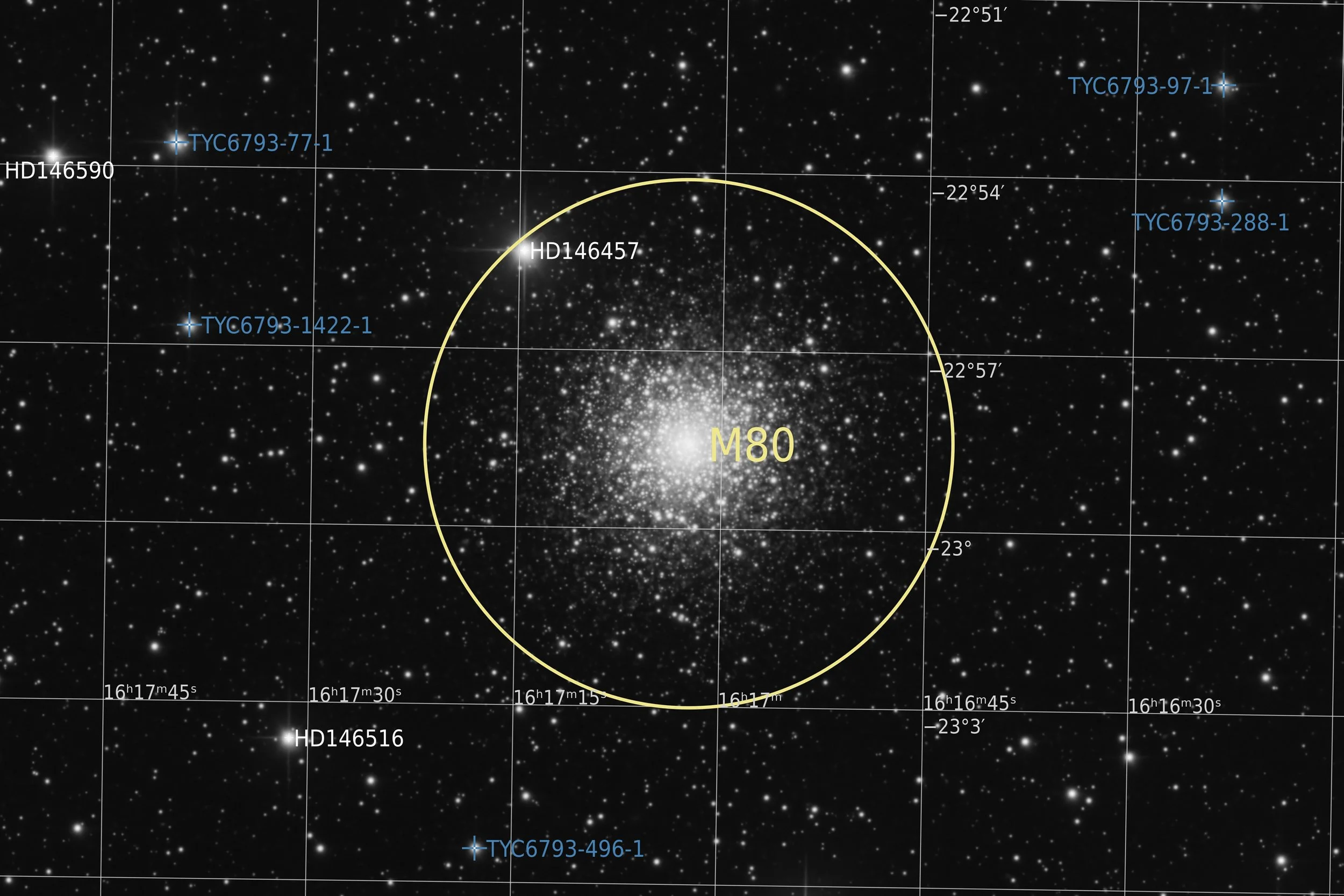
Messier 80, NGC 6093
22’ x 15’ | 0.3”/px | 4500 × 3000 px
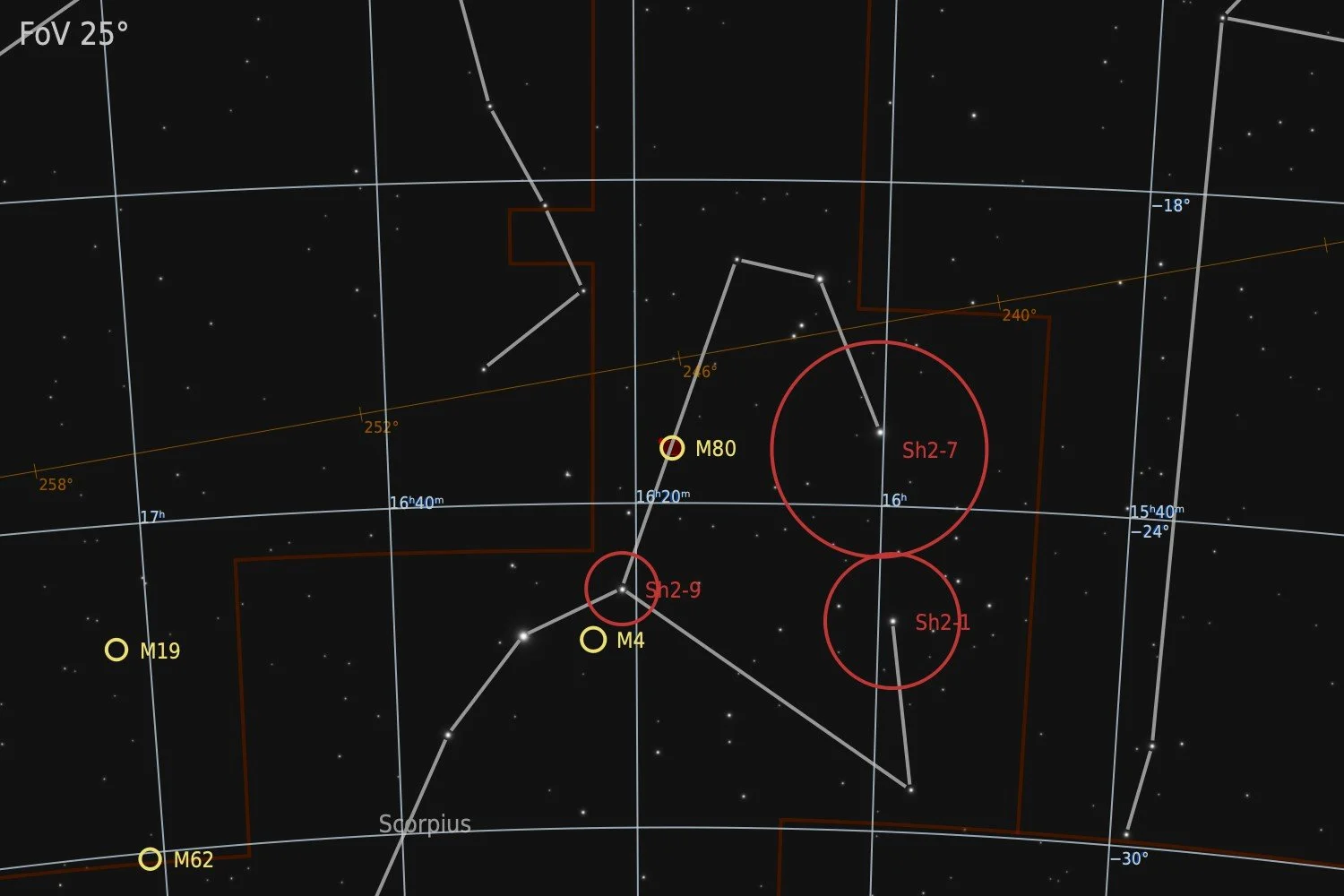
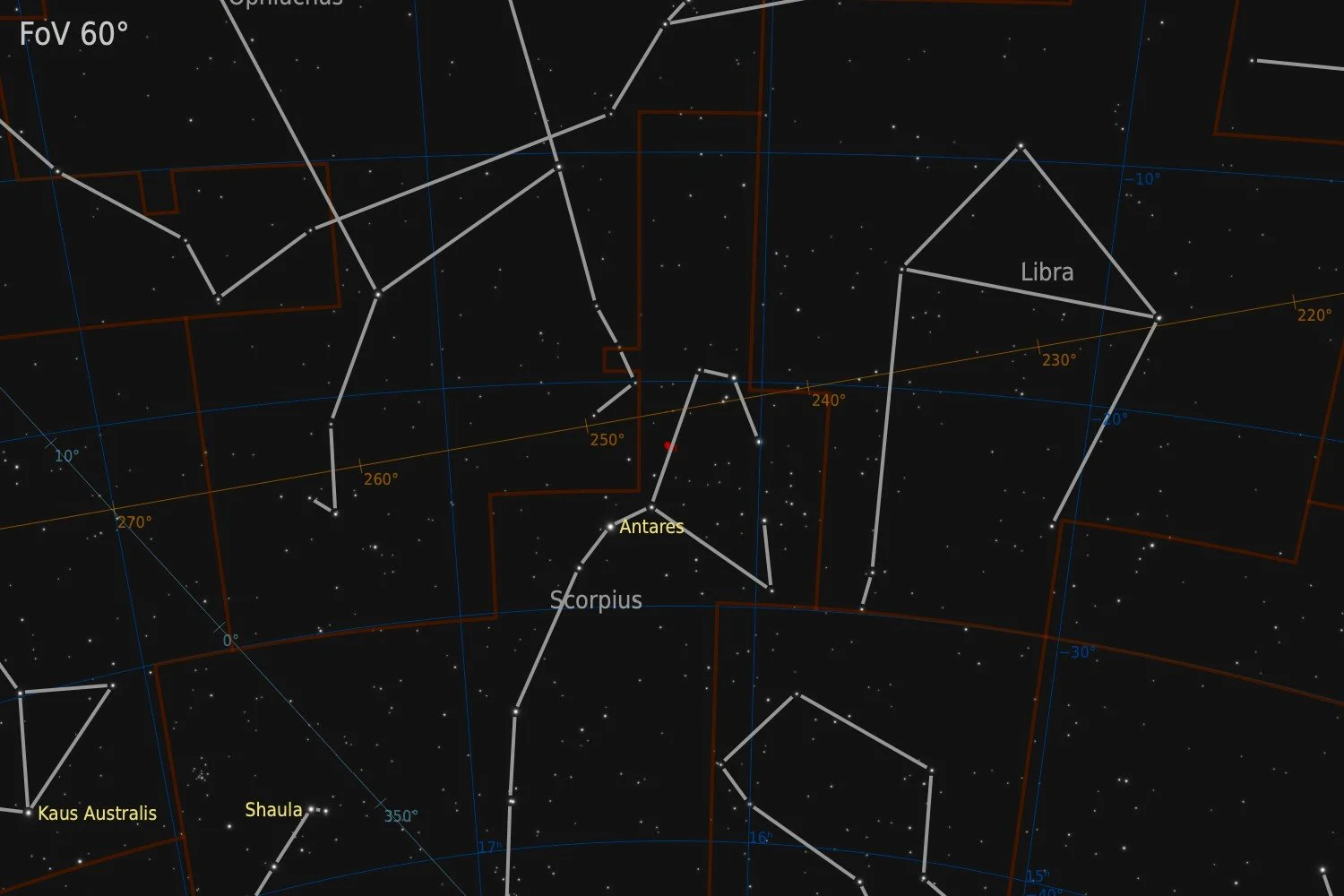
Scorpius
RA 16h 17m 04s Dec -22° 58’ 38” | 0°
Messier 80, also known as NGC 6093, is a globular cluster located in the constellation Scorpius. It was discovered by Charles Messier on January 4, 1781, and independently found by Wilhelm Herschel, who later resolved it into individual stars. M80 lies at a distance of approximately 32,600 light-years from Earth, placing it in the inner regions of the Milky Way and relatively close to the galactic centre. It is one of the densest and most centrally concentrated globular clusters in the Messier catalogue, containing several hundred thousand stars packed into a true diameter of roughly 95 light-years. Its compact and symmetrical appearance gives it a distinctly stellar quality at low magnification, requiring higher resolution to begin resolving individual stars toward its outer regions. M80 holds a notable place in astronomical history as the site of a recorded nova in 1860, designated T Scorpii. At its peak it briefly became bright enough to be visible to the naked eye and was for a short time the brightest star in Scorpius, making it one of the most dramatic nova events observed within a globular cluster in the 19th century. The cluster is also known to contain an unusually high number of blue straggler stars — objects that appear younger and hotter than the surrounding stellar population, thought to form through stellar collisions or mass transfer in binary systems, processes that are more likely in the dense cores of compact clusters like M80.
Source: Claude.ai
Data Acquisition
Data was collected during 6 nights in May 2026, using a 14” reflector telescope with full-frame camera at the remote observatory in Spain. Data was gathered using standard RGB filters. A total of approximately 6 hours of data was finally combined to create the final image.
Location Remote hosting facility Roboscopes in Fregenal de la Sierra, Spain (38°N 6°W)
Sessions
Frames
Equipment
Telescope
Mount
Camera
Filters
Guiding
Accessoires
Software
Planewave CDK14 (2563mm @ f/7.2), Optec Gemini Rotating focuser
10Micron GM2000HPS, custom pier
Moravian C3-61000 Pro (full frame), cooled to -10 ºC
Chroma 2” RGB unmounted, Moravian filterwheel L, 7-position
Unguided
Compulab Tensor I-22, Dragonfly, Pegasus Ultimate Powerbox v2
Voyager Advanced, Viking, Mountwizzard4, Astroplanner, PixInsight 1.9.3
Processing
All processing was done in Pixsinsight unless stated otherwise. Default features were enhanced using scripts and tools from RC-Astro, SetiAstro, GraXpert, CosmicPhotons and others. Images were calibrated using 50 Darks, 50 Flats, and 50 Flat-Darks, registered and integrated using WeightedBatchPreProcessing (WBPP). The processing workflow diagram below outlines the steps taken to create the final image.
M80 is rather small and compact. It’s low altitude (Declination is -22°) further means that the stars are not the tightest either. Together it formed a bit of a challenge to create enough detail to resolve individual stars, without blowing out the core of the cluster. Towards the end of the processing it appeared I had a bit of black-point space to manoeuvre with. So I lifted the black point and then stretched the image further, ever so slightly.
The rest of the processing was very standard. See the outline below for a detailed breakdown of the processing applied to the image.
Processing workflow (click to enlarge)
This image has been published on Astrobin.