M88
Messier 188, NGC 4501
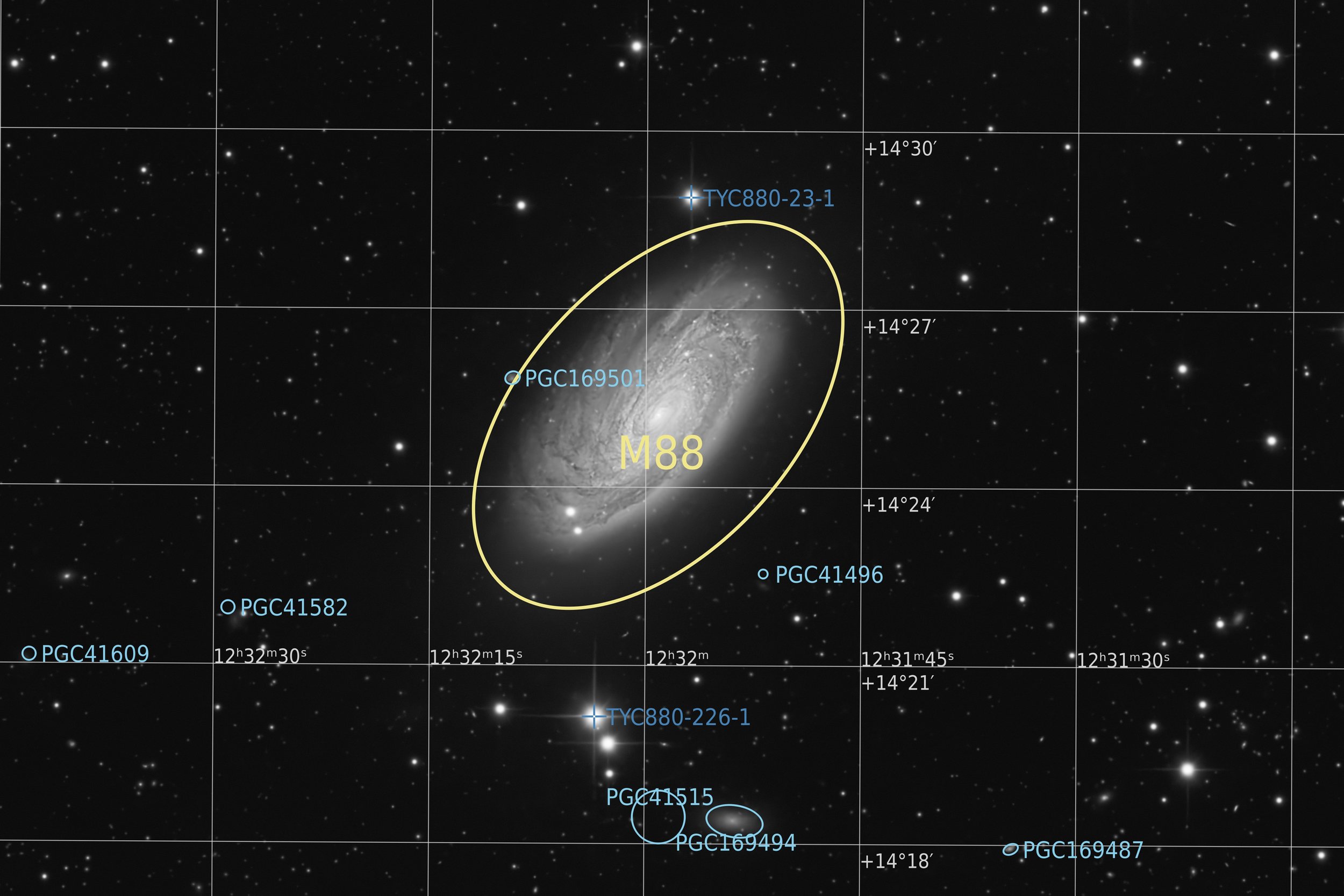
22’ x 15’ | 0.3”/px | 4500 × 3000 px
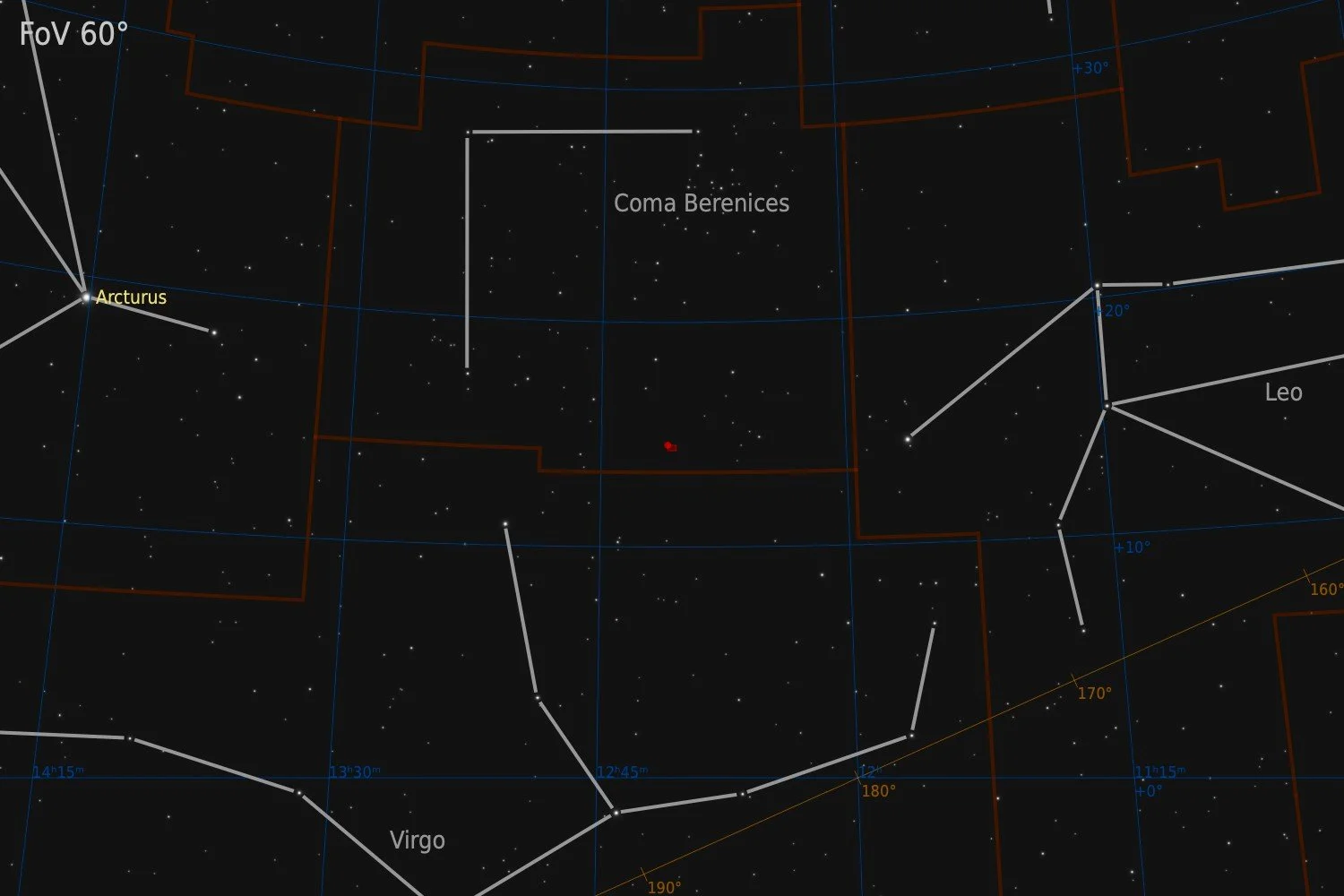
Coma Berenices
RA 12h 31m 58s Dec +14° 24’ 40” | 0°
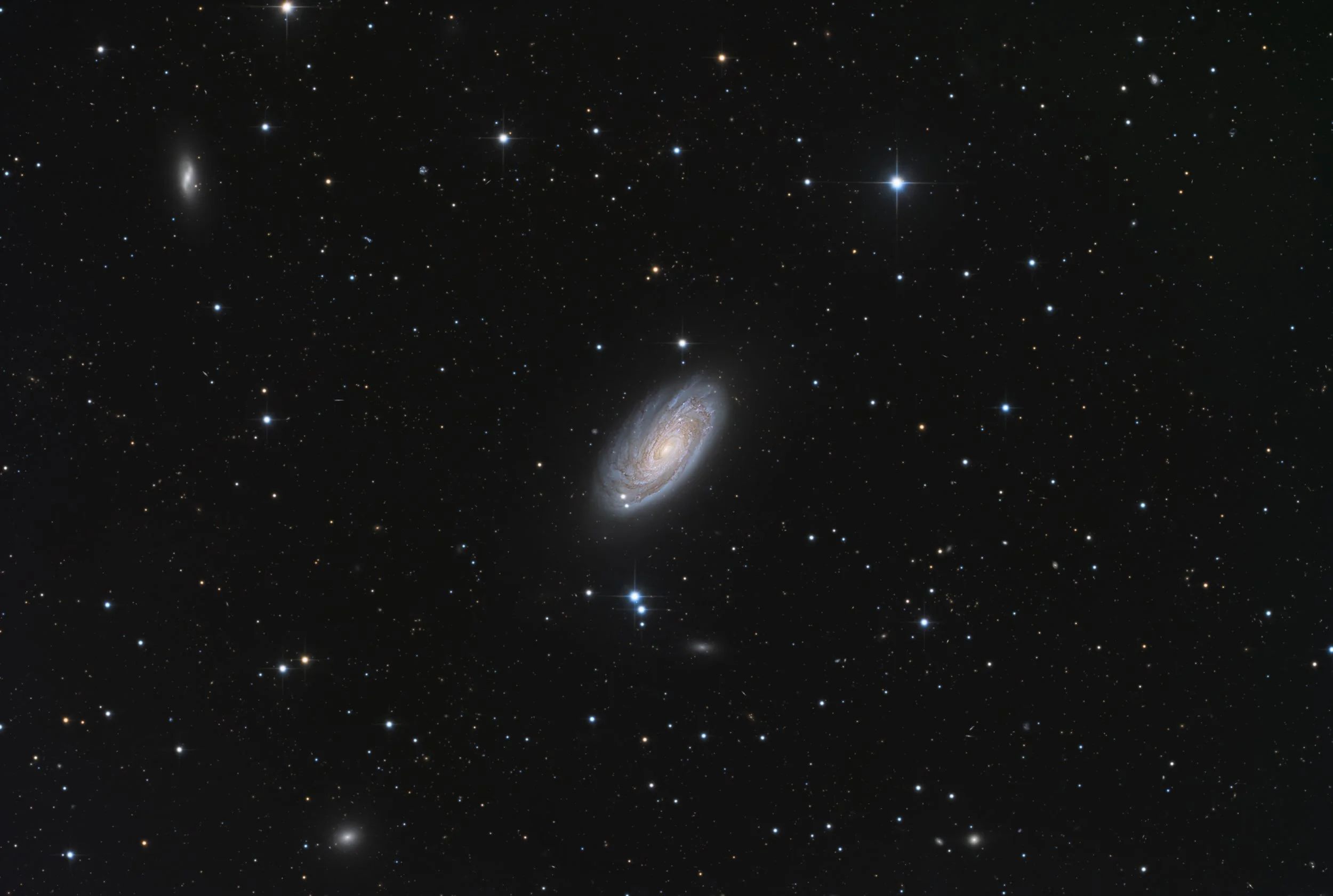
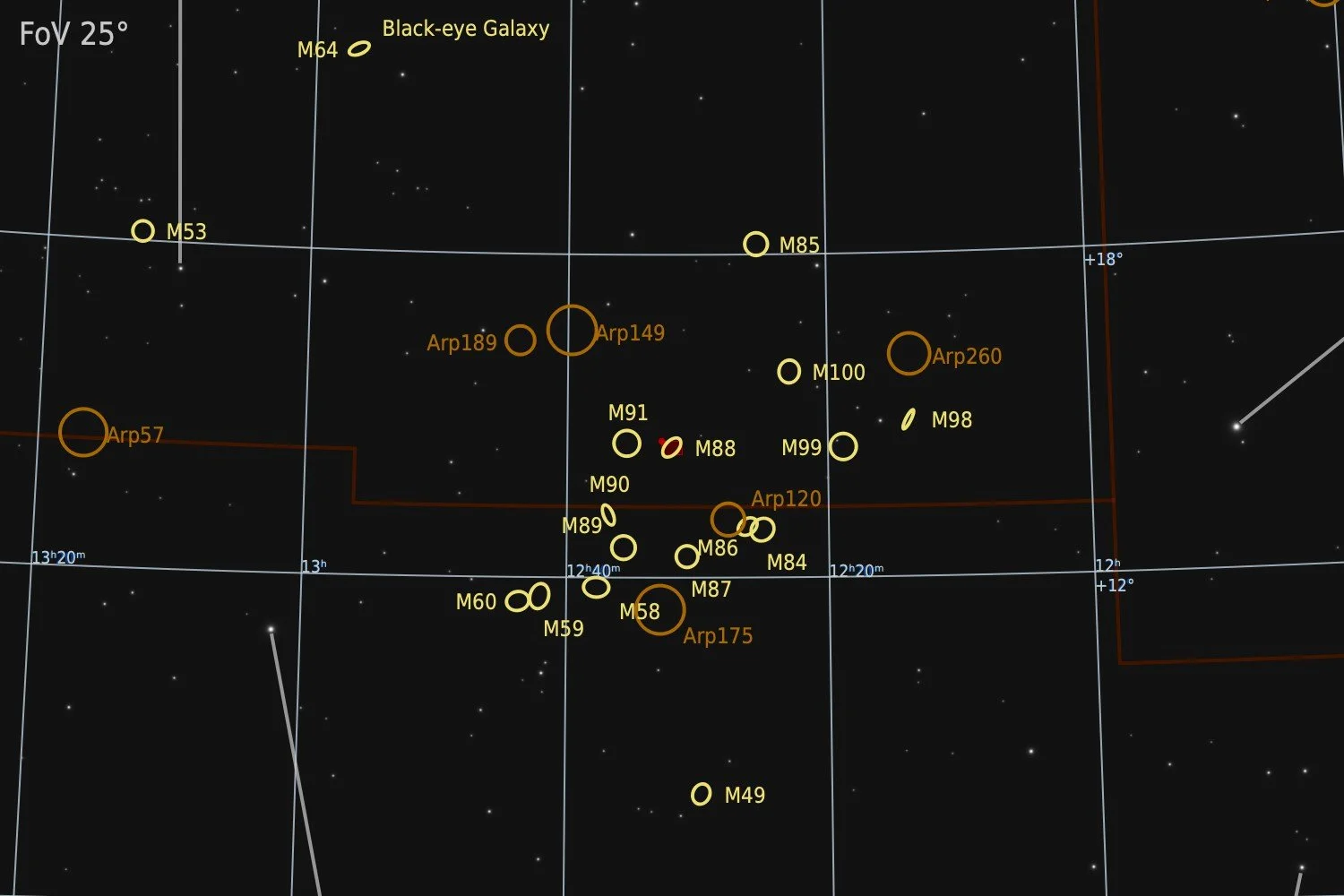
Messier 88, also known as NGC 4501, is a spiral galaxy located in the constellation Coma Berenices. It was discovered by Charles Messier on March 18, 1781, during a single prolific observing session in which he catalogued several Virgo Cluster members in quick succession. M88 lies at a distance of approximately 47 million light-years from Earth and is one of the brightest and most prominent spiral galaxies in the Virgo Cluster. It spans roughly 120,000 light-years in diameter and is inclined at around 30 degrees to our line of sight, giving it an elongated appearance that reveals much of its spiral structure. The galaxy has a well-defined bright nucleus and two broad, sweeping spiral arms laced with dust lanes, making it one of the more visually rewarding spirals in the Messier catalogue. M88 is classified as a Seyfert 2 galaxy, meaning it contains an active galactic nucleus that produces significant quantities of radiation, though the central engine is partially obscured by dust and gas. It is also notable for being one of the few Messier objects with a confirmed blueshift, meaning it is moving toward the Milky Way rather than away from it, a consequence of its motion within the gravitational environment of the Virgo Cluster overcoming the general expansion of the universe. At least two supernovae have been recorded in M88, SN 1999by and SN 2013ck, the former of which was a well-observed Type Ia event used in distance measurement studies.
Source: Claude.ai
Data Acquisition
Data was collected during 6 nights in January and February 2026, using a 14” reflector telescope with full-frame camera at the remote observatory in Spain. Data was gathered using standard LRGB filters. A total of approximately 17 hours of data was finally combined to create the final image.
Location Remote hosting facility IC Astronomy in Oria, Spain (37°N 2°W)
Sessions
Frames
Equipment
Telescope
Mount
Camera
Filters
Guiding
Accessoires
Software
Planewave CDK14 (2563mm @ f/7.2), Optec Gemini Rotating focuser
10Micron GM2000HPS, custom pier
Moravian C3-61000 Pro (full frame), cooled to -10 ºC
Chroma 2” LRGB unmounted, Moravian filterwheel L, 7-position
Unguided
Compulab Tensor I-22, Dragonfly, Pegasus Ultimate Powerbox v2
Voyager Advanced, Viking, Mountwizzard4, Astroplanner, PixInsight 1.9.4
Processing
All processing was done in Pixsinsight unless stated otherwise. Default features were enhanced using scripts and tools from RC-Astro, SetiAstro, GraXpert, CosmicPhotons and others. Images were calibrated using 50 Darks, 50 Flats, and 50 Flat-Darks, registered and integrated using WeightedBatchPreProcessing (WBPP). The processing workflow diagram below outlines the steps taken to create the final image.
Processing followed a very standard workflow, as outlined below.
Processing workflow (click to enlarge)
This image has been published on Astrobin.