

Images

IC-434
IC434 is better known as the horse-head nebula and one of the most well-known nebulae at the night sky. The image here contains just over 2h of exposure, taken using a travel rig during a trip to Scotland. Updates to the travel rig had been applied, the most notable being that it is now run using Stellarmate on an iPad mini.


Sh2-86
Sh2-86 is a rather faint nebula in the constellation Vulpecula at a distance of approximately 6000 lightyear. Especially the OIII and SII signals are very faint. But during processing they could be retrieved well. Using the Hubble Palette, the final result is rather impressive with the big pillar structures in the nebula.

Sh2-105 | C27
The Crescent nebula, also known as Sh2-105 and C27, is an iconic deep sky object in the constellation Cygnus. In 2018 this object was imaged, so the current image gives a good idea of the progress that has been made over time.

M16 | Sh2-49
M16 is also known as the Eagle Nebula, but the central part of this nebula is made even more popular by the Hubble Telescope, and is nick-named the pillars of creation. Here in a narrowband version with a total of almost 40h of exposure.


IC59, IC63
A tricky target to image. The super bright star Gamma Cassiopeia, surrounded by the hydrogen-rich but faint nebulae IC59 and IC63. A combination of broadband and narrowband images allowed capturing both aspects.




Caldwell 4
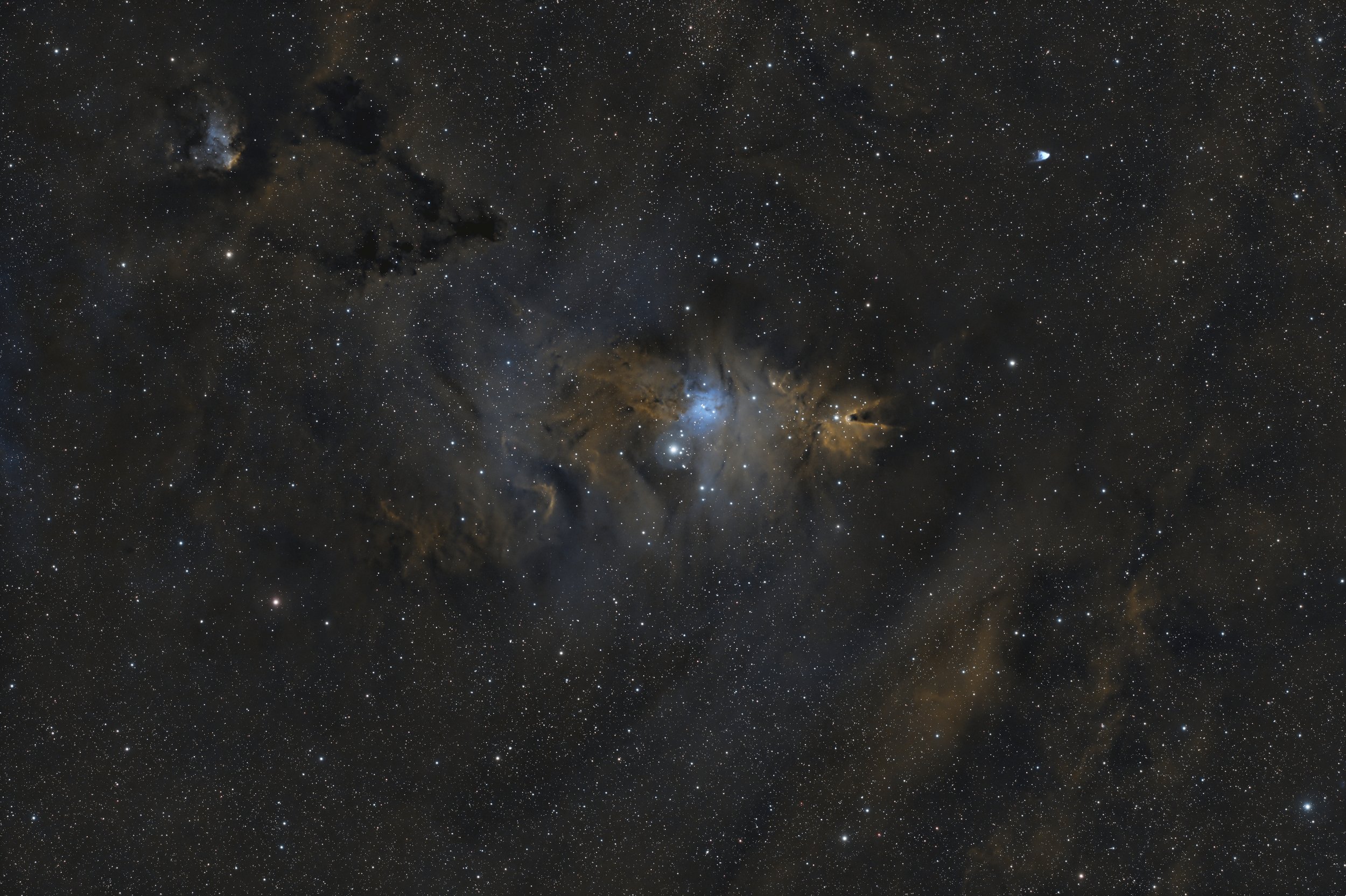
An image of NGC7023, captured on three different occasions, two(!) years apart. The bright blue reflection nebula is referred to as Iris Nebula, named after the similarly blue flower. With more than 17h of exposure also the darker nebulae are visible.


