Caldwell 10
NGC 663
43’ x 28’ | 0.3”/px | 8582 × 5737 px | full resolution
Cassiopeia
RA 1h 46m 18s Dec +61° 13’ 40” | 0°
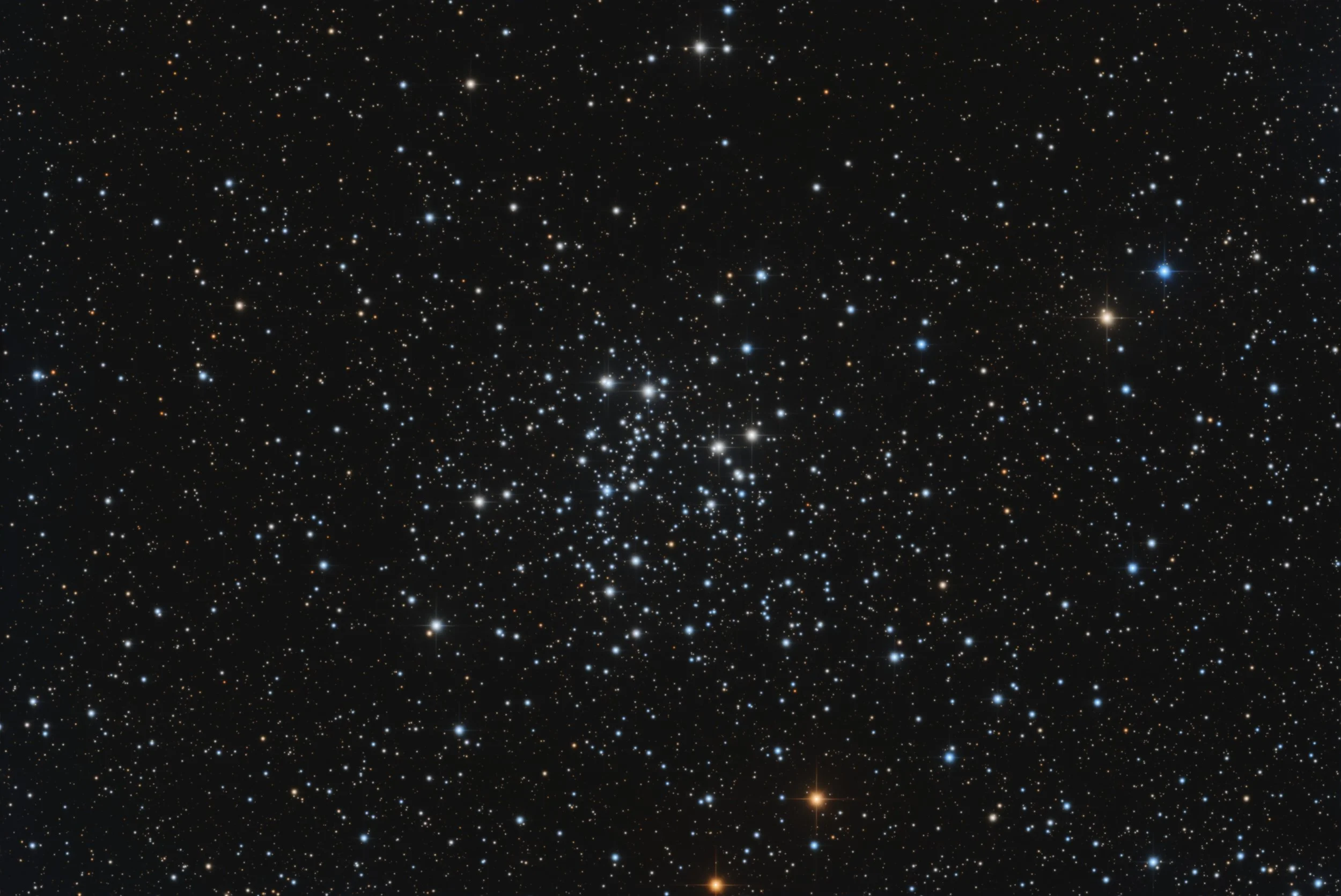
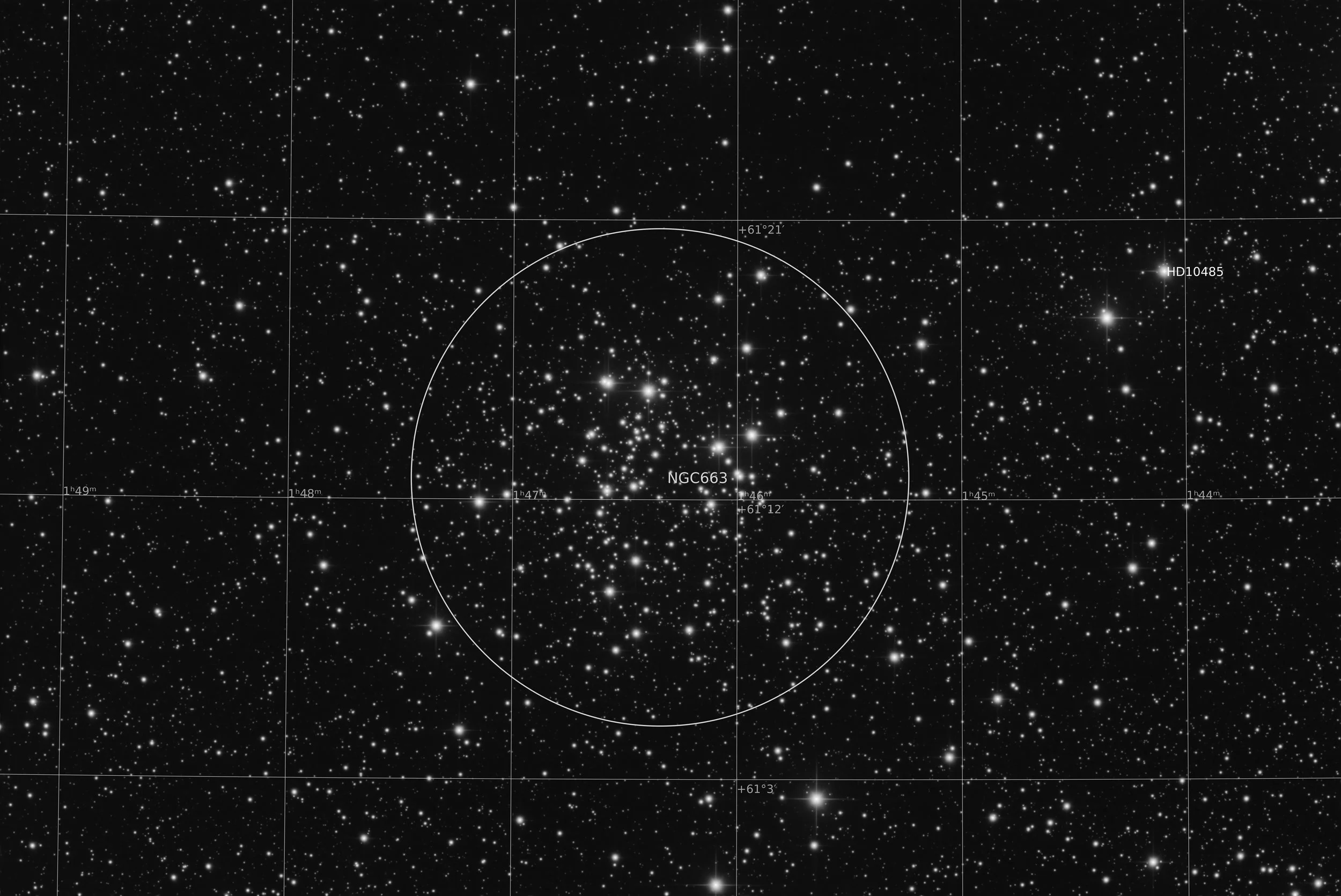
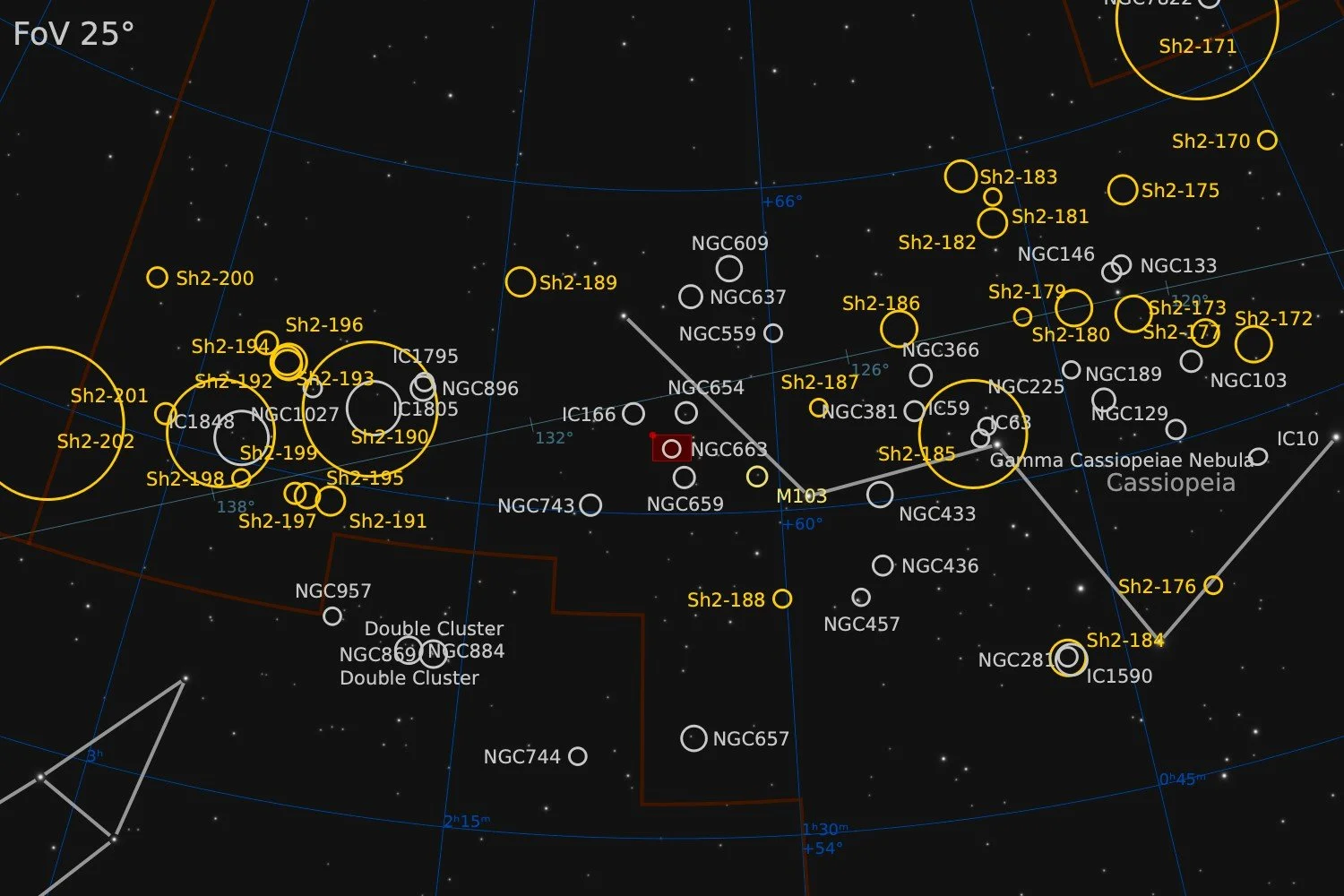
Caldwell 10, also known as NGC 663, is a young open cluster located 8,800 light years from Earth in the constellation of Cassiopeia. It has an estimated 400 stars and spans about a quarter of a degree across the sky. Based on measurements by Gaia, it has an estimated age of 20–25 million years. The star cluster is assumed to form part of the stellar association Cassiopeia OB8, that is located in the Perseus Arm of the Milky Way, along with the open clusters M103, NGC 654, NGC 659, and some supergiant stars scattered between them, all of them having similar ages and distances. It is likely the most massive star cluster in the Cassiopeia OB8 association, and possibly the Perseus Arm.
Source: Wikipedia
Data Acquisition
Data was collected during 2 nights in December 2025, using a 14” reflector telescope with full-frame camera at the remote observatory in Spain. Data was gathered using standard RGB filters. A total of approximately 7 hours of data was finally combined to create the final image.
Location Remote hosting facility IC Astronomy in Oria, Spain (37°N 2°W)
Sessions
Frames
Equipment
Telescope
Mount
Camera
Filters
Guiding
Accessoires
Software
Planewave CDK14 (2563mm @ f/7.2), Optec Gemini Rotating focuser
10Micron GM2000HPS, custom pier
Moravian C3-61000 Pro (full frame), cooled to -10 ºC
Chroma 2” RGB unmounted, Moravian filterwheel L, 7-position
Unguided
Compulab Tensor I-22, Dragonfly, Pegasus Ultimate Powerbox v2
Voyager Advanced, Viking, Mountwizzard4, Astroplanner, PixInsight 1.9.3
Processing
All processing was done in Pixsinsight unless stated otherwise. Default features were enhanced using scripts and tools from RC-Astro, SetiAstro, GraXpert, CosmicPhotons and others. Images were calibrated using 50 Darks, 50 Flats, and 50 Flat-Darks, registered and integrated using WeightedBatchPreProcessing (WBPP). The processing workflow diagram below outlines the steps taken to create the final image.
As was recently described in the processing of Caldwell 8, an ArcsinhStretch followed by a regular HistogramTransformation stretch often gives the most pleasing results. That was applied for this target as well. However, both those tools were used right within the GHS process. GHS really works like a Swiss Army knife for stretching, and while individual tools have their benefit due to their simplicity, GHS offers everything in one environment and often has a bit more flexibility in terms of the application of various stretches, blends between colour and RGB mode, etc.
The rest of the processing used a standard approach, outlined below.
Processing workflow (click to enlarge)
This image has been published on Astrobin.