Caldwell 47
NGC 6934
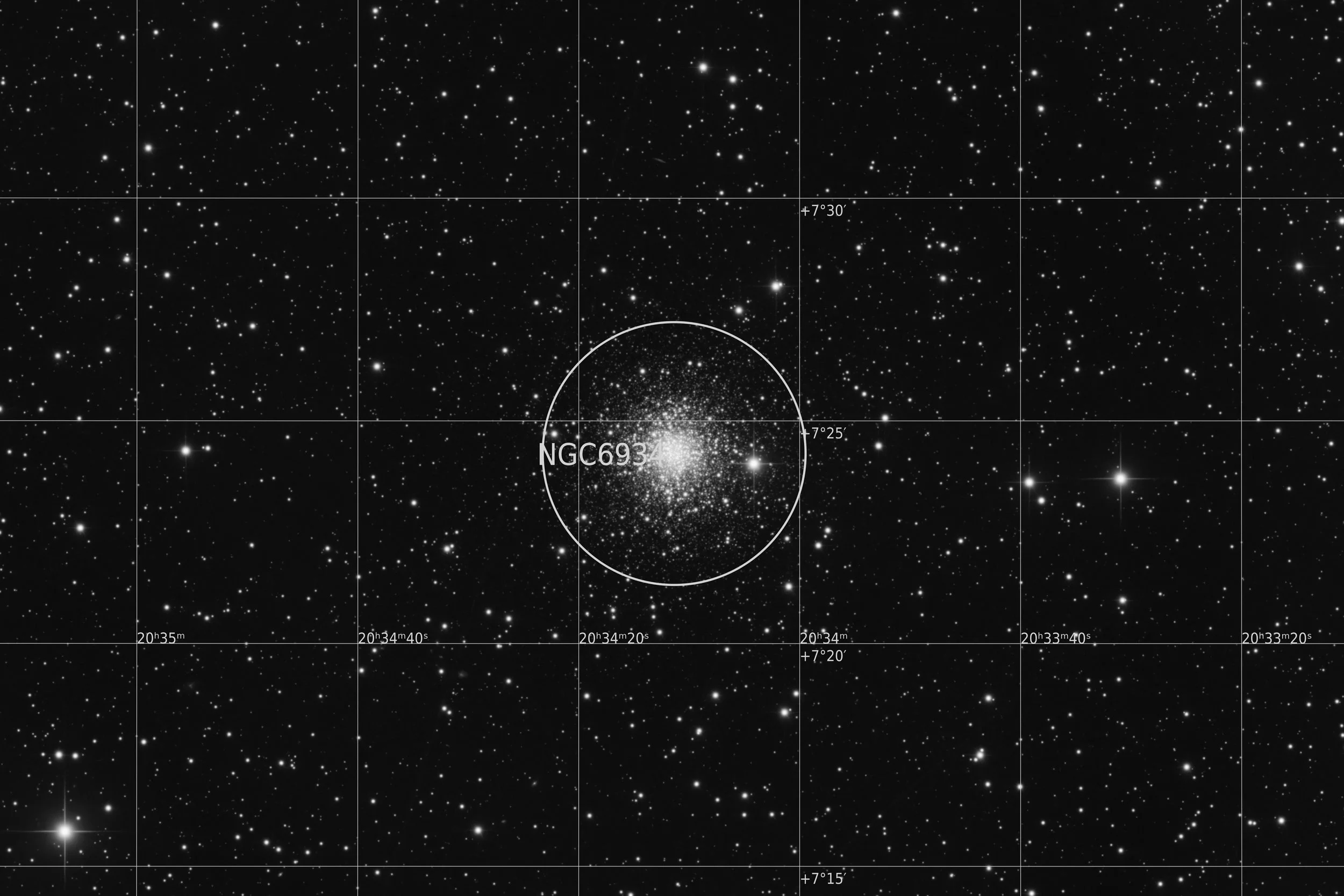
30’ x 20’ | 0.3”/px | 6000 × 4000 px
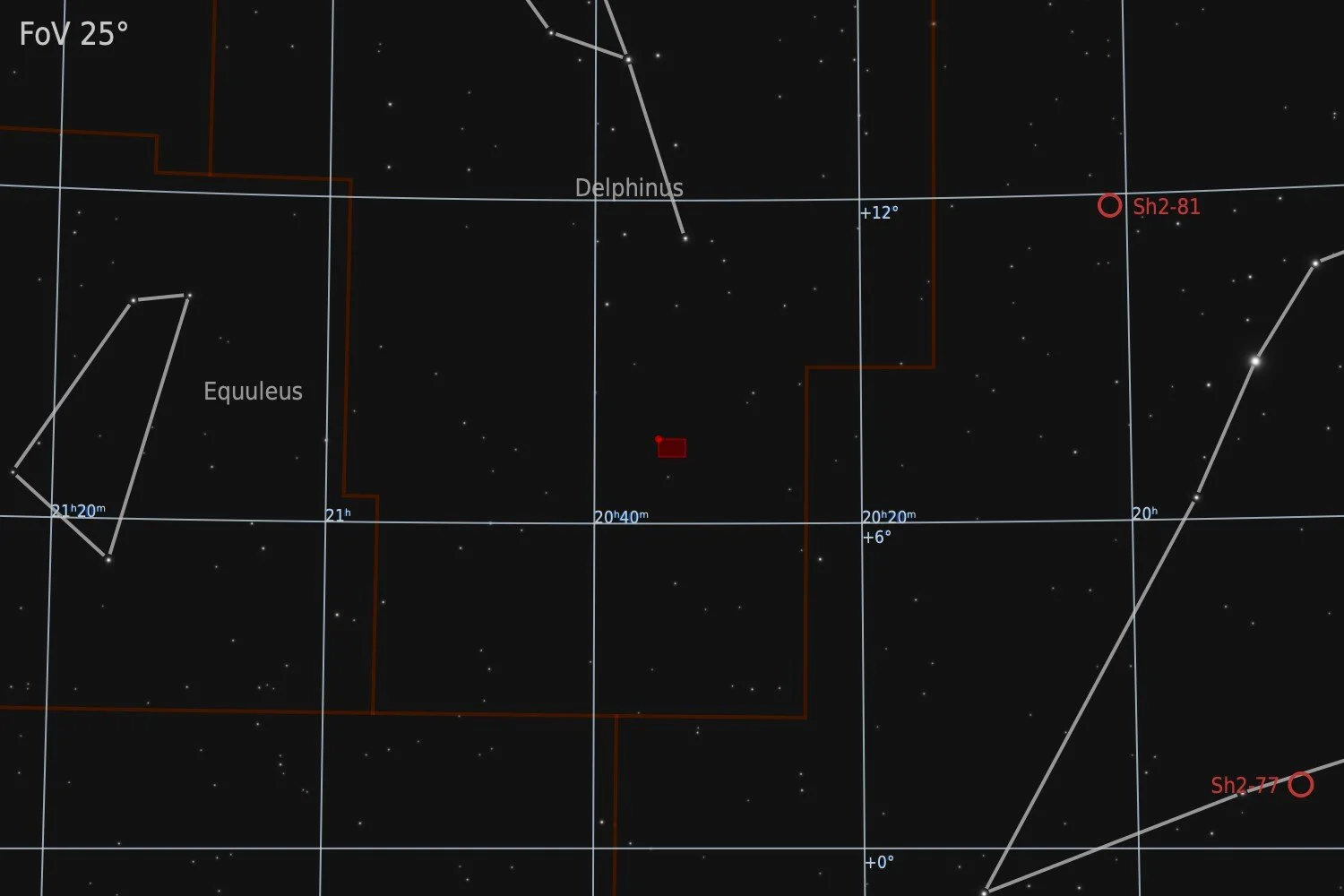
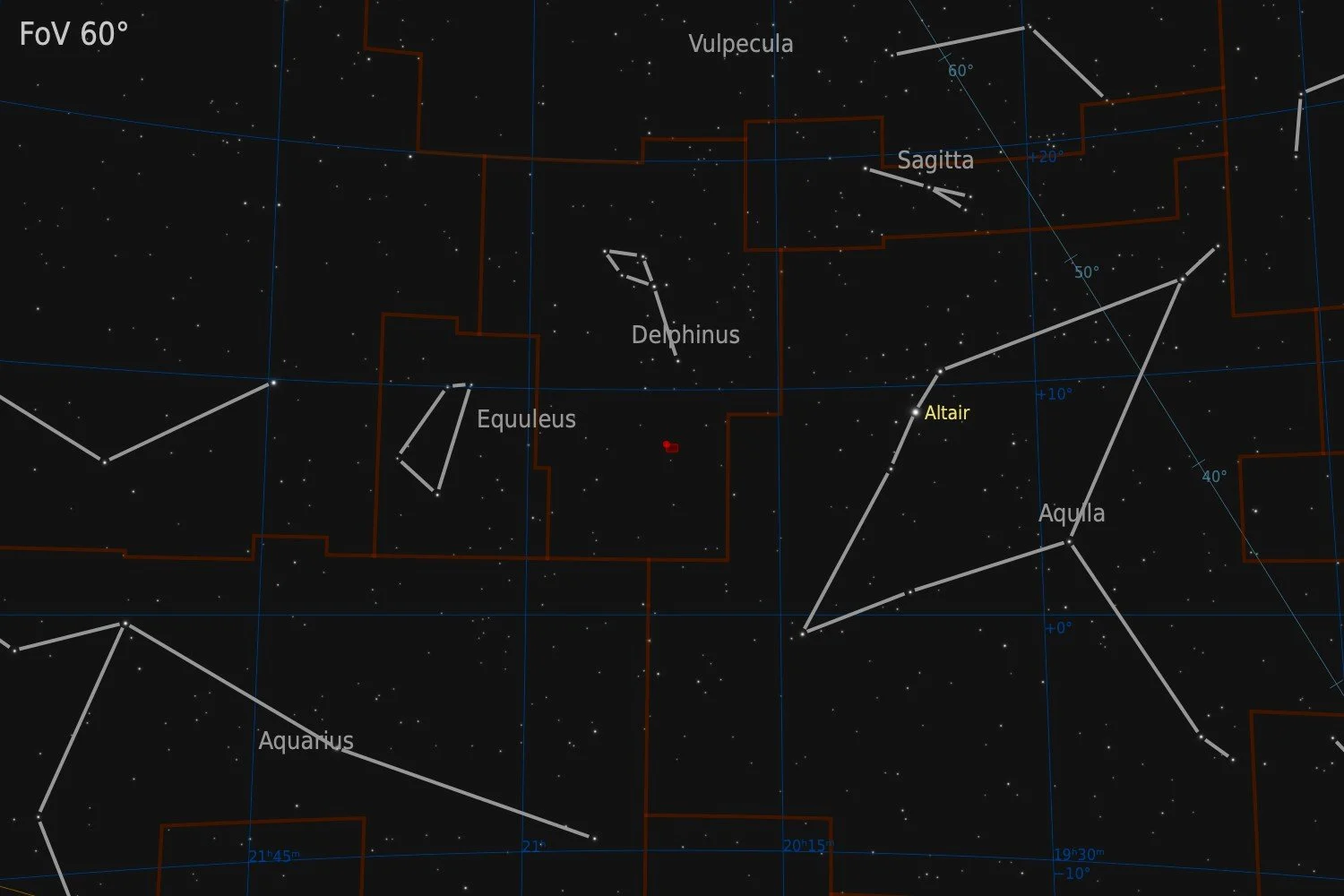
Delphinus
RA 20h 34m 12s Dec +7° 24’ 24” | 0°
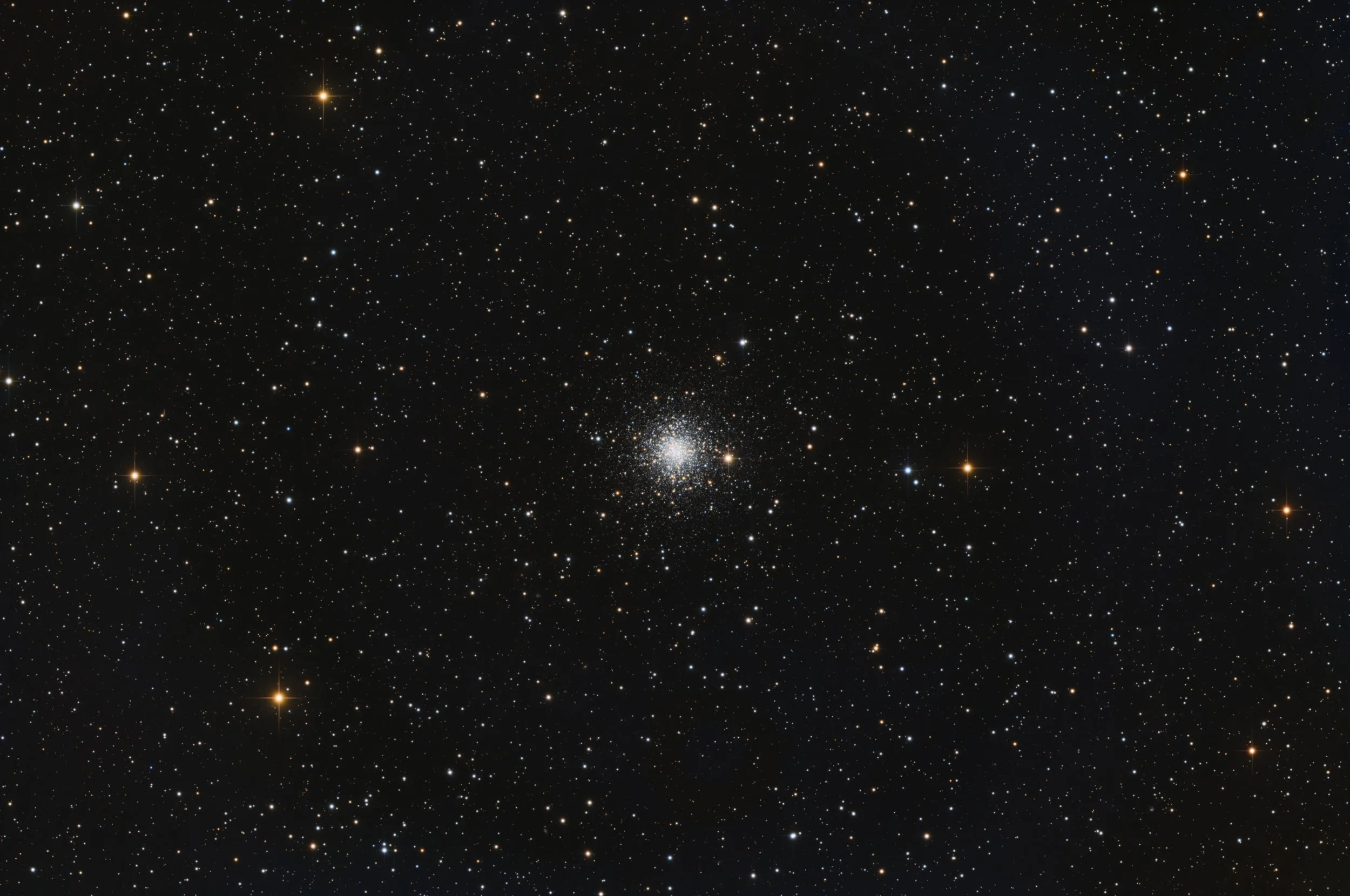
Caldwell 47, also known as NGC 6934, is a globular cluster located in the constellation Delphinus, a small but distinctive constellation in the northern summer sky. It was discovered by William Herschel on September 24, 1785. C47 lies at a distance of approximately 50,000 light-years from Earth, placing it well out in the outer halo of the Milky Way. It has a diameter of roughly 73 light-years and reaches an apparent magnitude of around 8.9. Its considerable distance gives it a compact and condensed appearance. NGC 6934 contains a number of RR Lyrae variable stars, which have been used to refine distance estimates and study the properties of its stellar population. Its position in the outer halo, far from the crowded inner regions of the Milky Way, means it has experienced relatively little tidal disruption compared to clusters closer to the galactic centre, and it retains a fairly regular and symmetrical appearance as a result.
Source: Claude.ai
Data Acquisition
Data was collected during 2 nights in June 2026, using a 14” reflector telescope with full-frame camera at the remote observatory in Spain. Data was gathered using standard RGB filters. A total of approximately 6 hours of data was finally combined to create the final image.
Location Remote hosting facility Roboscopes in Fregenal de la Sierra, Spain (38°N 6°W)
Sessions
Frames
Equipment
Telescope
Mount
Camera
Filters
Guiding
Accessoires
Software
Planewave CDK14 (2563mm @ f/7.2), Optec Gemini Rotating focuser
10Micron GM2000HPS, custom pier
Moravian C3-61000 Pro (full frame), cooled to -10 ºC
Chroma 2” RGB unmounted, Moravian filterwheel L, 7-position
Unguided
Compulab Tensor I-22, Dragonfly, Pegasus Ultimate Powerbox v2
Voyager Advanced, Viking, Mountwizzard4, Astroplanner, PixInsight 1.9.4
Processing
All processing was done in Pixsinsight unless stated otherwise. Default features were enhanced using scripts and tools from RC-Astro, SetiAstro, GraXpert, CosmicPhotons and others. Images were calibrated using 50 Darks, 50 Flats, and 50 Flat-Darks, registered and integrated using WeightedBatchPreProcessing (WBPP). The processing workflow diagram below outlines the steps taken to create the final image.
BlurXTerminator ML4 vs ML5
The latest Machine Learning (ML) model of BlurXTerminator (BXT) was released. This new ML5 model promises among other things a better correction on bright stars, better handling of high dynamic range and better handling of dense star fields, such as globular clusters. In my experience, star clusters could suffer quite a bit from worm-like artefacts when BXT was applied too strongly. In fact, I often left the non-stellar sharpening at 0 to prevent such anomalies from happening. With the new ML5 being released I decided to give it a try on this Caldwell 47 target.
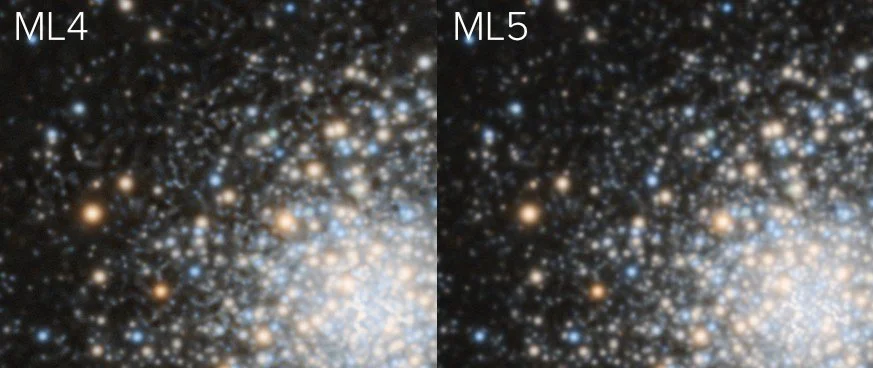
A closeup comparison between the previous model of BXT (ML4) versus the new ML5 model. ML5 is much better in resolving individual stars in a dense starfield without creating worm-like artefacts that previous iterations were known for. Also resolving power in the core of the cluster is improved in ML5.
Both images were processed in an identical way. BXT was set to 0.35 for star sharpening and 0.7 for non-stellar sharpening. No halo correction was applied. As can be clearly seen in the above close-up images, ML4 caused quite a bit of worm-like artefacts. ML5 on the other hand was much better in resolving a clean star-field. Also the resolving power in the center of the cluster was better with ML5. So for star clusters, ML5 can definitely be recommended. One of the other effects of ML5 is cleaner looking bright stars. Very bright stars can sometimes suffer from slight imperfections in the optical system. This can be related to the spider vanes, reflections, baffle construction, filters, etc. ML5 cleans that up very nicely and produces more refractor like stars, but with the spikes. Some may like the slight imperfections as a kind of fingerprint of the system. Personally I like the improvements that BXT makes, and plan on fully using it going forward.
Processing followed a very standard approach. The outline below shows a detailed breakdown of the processing steps applied to the image.
Processing workflow (click to enlarge)
This image has been published on Astrobin.