

Images

M55
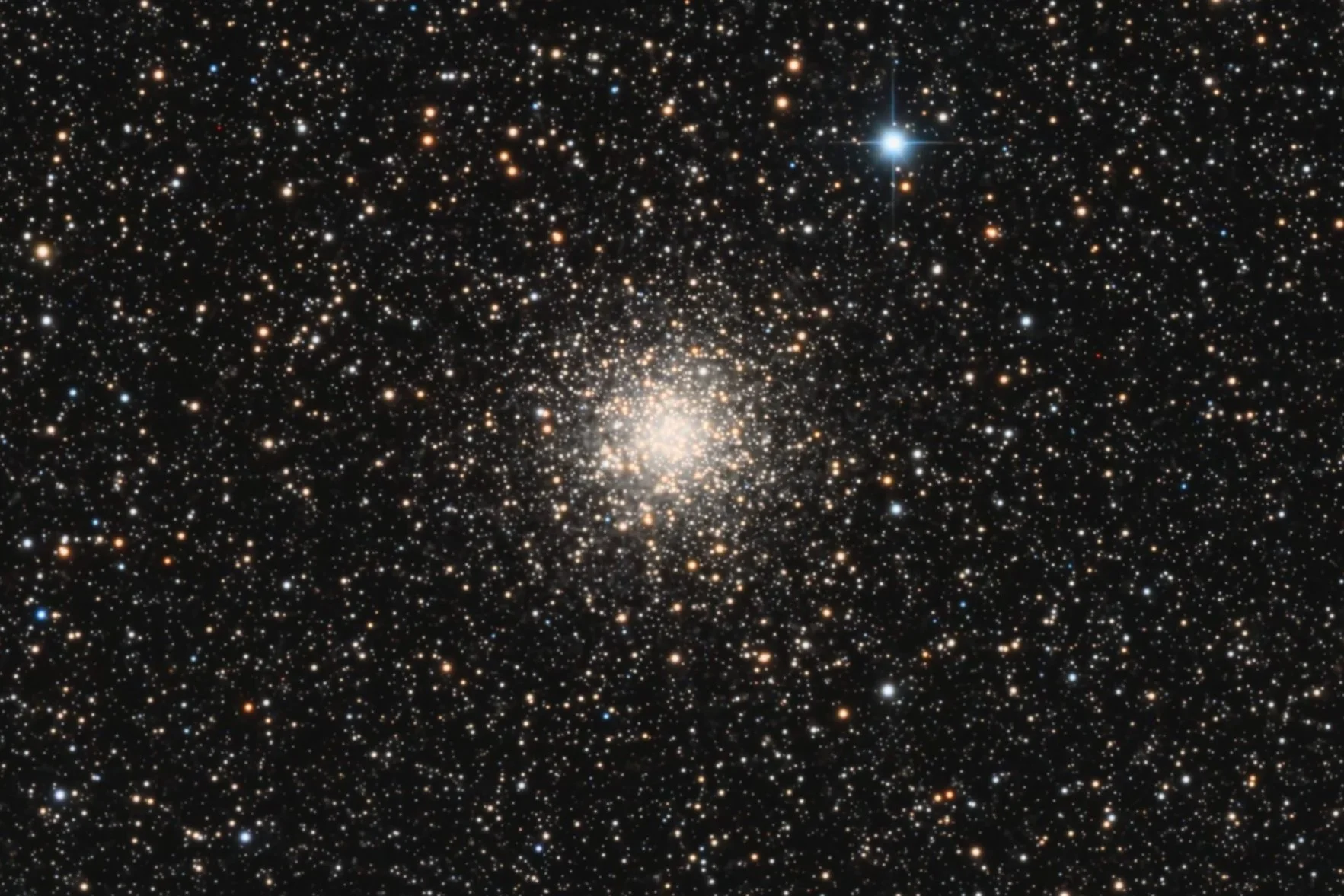
Messier 55, also known as NGC 6809, or Specter Cluster, is a globular cluster in the south of the constellation Sagittarius. It was discovered by Nicolas Louis de Lacaille in 1752 while observing from what today is South Africa. Charles Messier observed and catalogued it in 1778. M55 is about 17,600 light-years away from Earth. It contains about 269,000 solar masses (M☉).
Caldwell 30
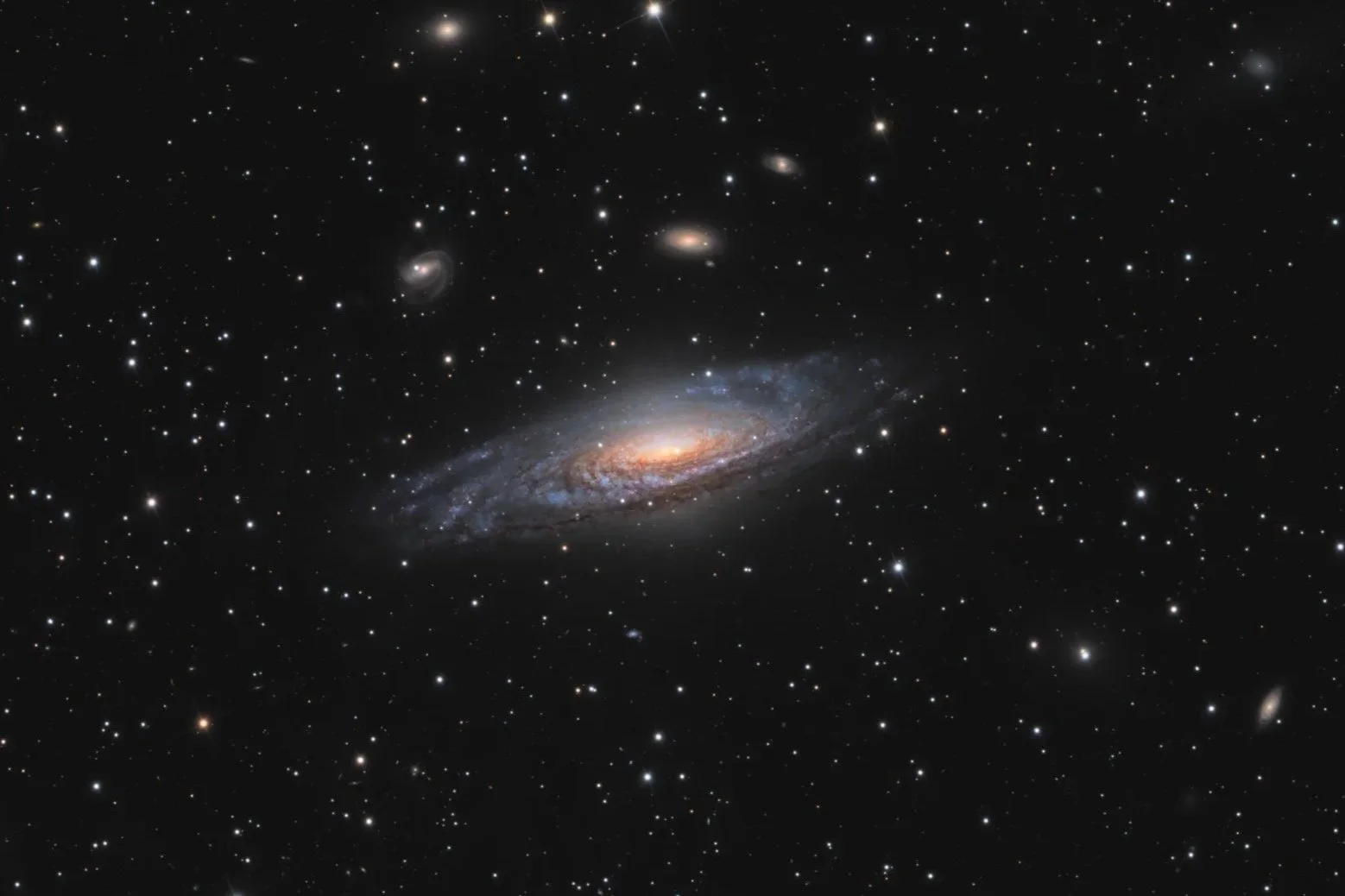
Caldwell 30, also known as NGC 7331, is an unbarred spiral galaxy about 43.79 million light-years away in the constellation Pegasus. It was discovered by William Herschel on 6 September 1784. The galaxy appears similar almost in size and structure to the Milky Way, and is sometimes referred to as "the Milky Way's twin".


M25
Messier 25, also known as IC 4725, is an open cluster of stars in the southern constellation of Sagittarius. It was first discovered by Philippe Loys de Chéseaux in 1745 and it was included in Charles Messier's list of nebulous objects in 1764. M25 is at a distance of about 2,000 light-years away from Earth and is 67.6 million years old.

Caldwell 19 | Sh2-125
Caldwell 19, or the Cocoon nebula, is a well known reflection/emission nebula in the constellation Cygnus. It is also member of the Sharpless II catalogue. The nebula is about 4,000 light-years away from us and the central star that ionises the surrounding gas is approximately 100,000 years old.
M73
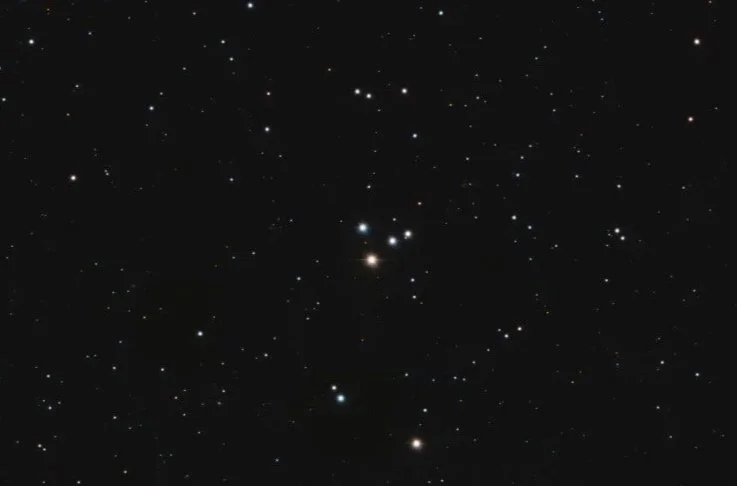
Messier 73, also known as NGC 6994, is an asterism in the constellation Aquarius. For a long time it was thought to be a small open cluster, but detailed analysis in 2002 revealed that the stars had no direct relationship to each other and just happened to look like they were standing close together from our line of sight.

Lunar Eclipse 2025
Under difficult conditions, the second half of the lunar eclipse 2025 could be photographed from an open field in The Netherlands

Sh2-135
Sharpless 2-135 is a faint emission nebula located in the constellation Cepheus, approximately 4,500 light-years from Earth. The nebula appears as a diffuse, reddish cloud, though it is relatively faint compared to neighbouring nebulae such as the Bubble Nebula (NGC 7635). It lies in a region rich with other notable nebulae, including Sh2-136 (the "Ghost Nebula") and Sh2-137.

M26
Messier 26, also known as NGC 6694, is an open cluster of stars in the southern constellation of Scutum. It was discovered by Charles Messier in 1764. M26 spans a linear size of 22 light years across with a tidal radius of 25 light-years, and is at a distance of 5,160 light years from the Earth. The brightest star is of magnitude 11 and the age of this cluster has been calculated to be 85.3 million years.


Sh2-124
Sh2-124 is a large emission nebula in the constellation Cygnus. It is located on the northwestern edge of the constellation. The complex is probably located in the Orion arm at a distance of about 8,480 light year. The predominant signal is Ha, but the much weaker OIII and SII signals could be boosted to result in a typical Hubble palette image.

M2
Messier 2 (NGC 7089) is a globular cluster in the constellation Aquarius. It was discovered by Jean-Dominique Maraldi in 1746, and is one of the largest known globular clusters. M2 is about 55,000 light-years distant from Earth. At 175 light-years in diameter, it is one of the larger globular clusters known.


M20
Messier 20, also called the Trifid Nebula, is an H II region in the north-west of Sagittarius. It was discovered by Charles Messier on June 5, 1764. Its name means 'three-lobe'. The object is an unusual combination of an open cluster of stars, an emission nebula (the reddish-pink portion), a reflection nebula (the blue portion), and a dark nebula (the apparent 'gaps' in the blue that cause the trifurcated appearance).

M23
Messier 23 is an open cluster of stars in the constellation Sagittarius. It was discovered by Charles Messier in 1764. It is in front of "an extensive gas and dust network". The cluster is centered about 2,050 light years away. Estimates for the number of its members range from 169 up to 414, with a directly-counted mass of 1,206 sun masses. The cluster is around 330 million years old.
M107
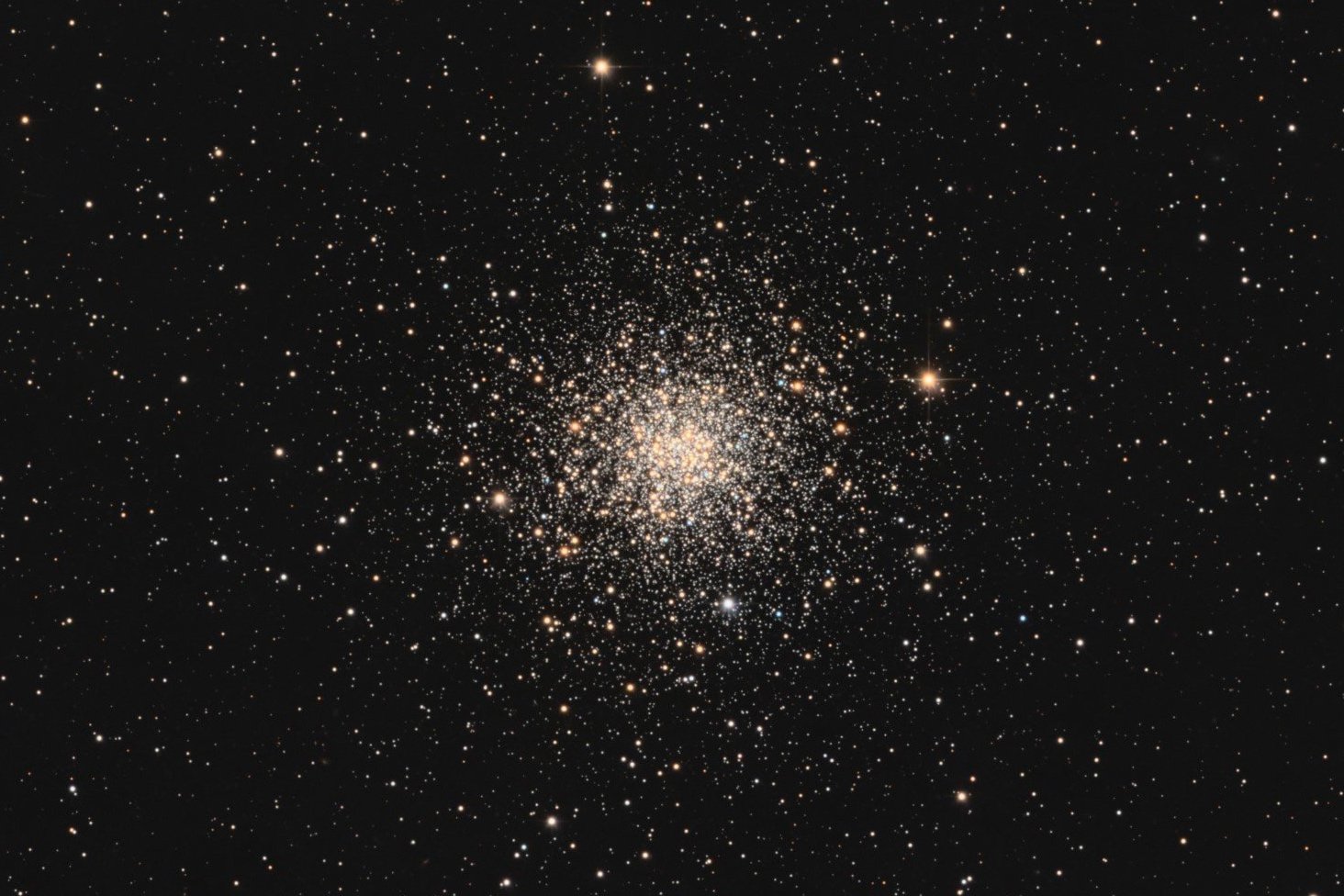
Messier 107, also known as the Crucifix Cluster, is a very loose globular cluster in the constellation Ophiuchus. It was discovered by Pierre Méchain in April 1782, and added to the Messier catalogue only in 1947 by Helen Sawyer Hogg together with three other objects found by Méchain. M107 is close to the galactic plane and about 20,900 light-years from Earth

M29
Messier 29, also known as the Cooling Tower Cluster, is a quite small, bright open cluster of stars just south of the central bright star Gamma Cygni in the constellation Cygnus. It was discovered by Charles Messier in 1764. Its age is estimated at 10 million years, as its five hottest stars are all giants of spectral class B0.

M104
Messier 104, also known as the Sombrero Galaxy, is a peculiar galaxy of unclear classification in the constellation Virgo. It was discovered on May 11, 1781 by Pierre Méchain. Charles Messier made a handwritten note about this and five other objects (now collectively recognized as M104 – M109) to his personal list of objects now known as the Messier Catalogue, but it was not "officially" included until 1921.

M6
Messier 6, also known as the Butterfly cluster, is an open cluster of stars in the southern constellation of Scorpius. The first astronomer to record its existence was Giovanni Battista Hodierna in 1654. 120 stars, ranging down to visual magnitude 15.1, have been identified as most likely cluster members. Most of the bright stars in this cluster are hot, blue B-type stars but the brightest member is a K-type orange giant star, BM Scorpii, which contrasts sharply with its blue neighbours in photographs.